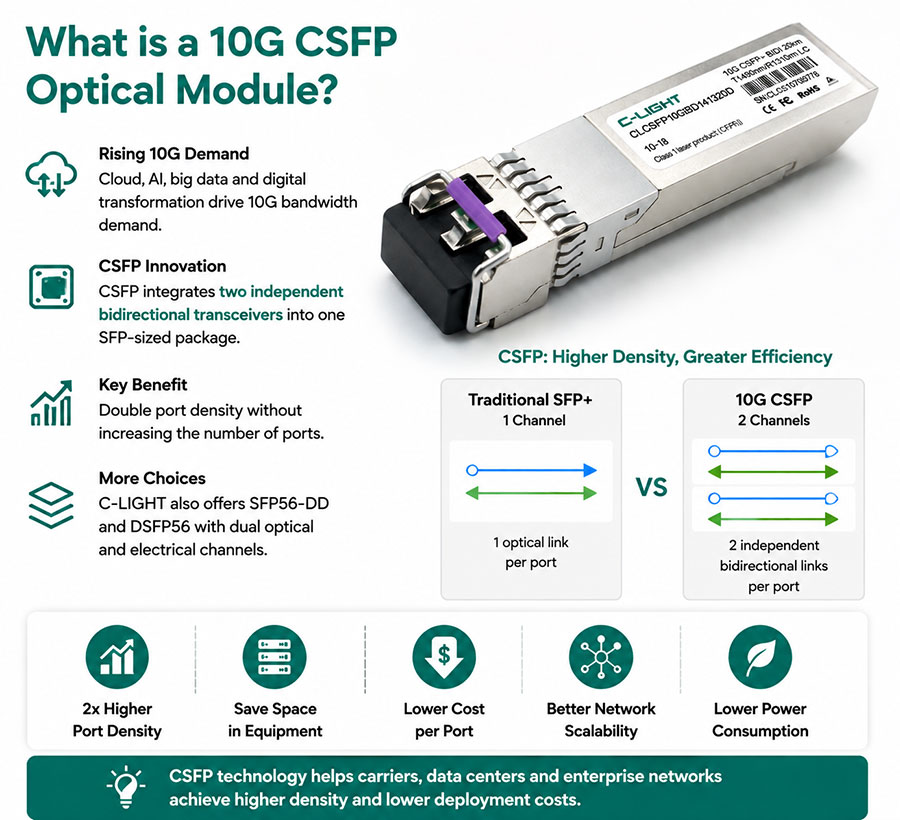
With the rapid development of cloud computing, artificial intelligence, big data, and enterprise digital transformation, demand for 10G bandwidth continues to grow.
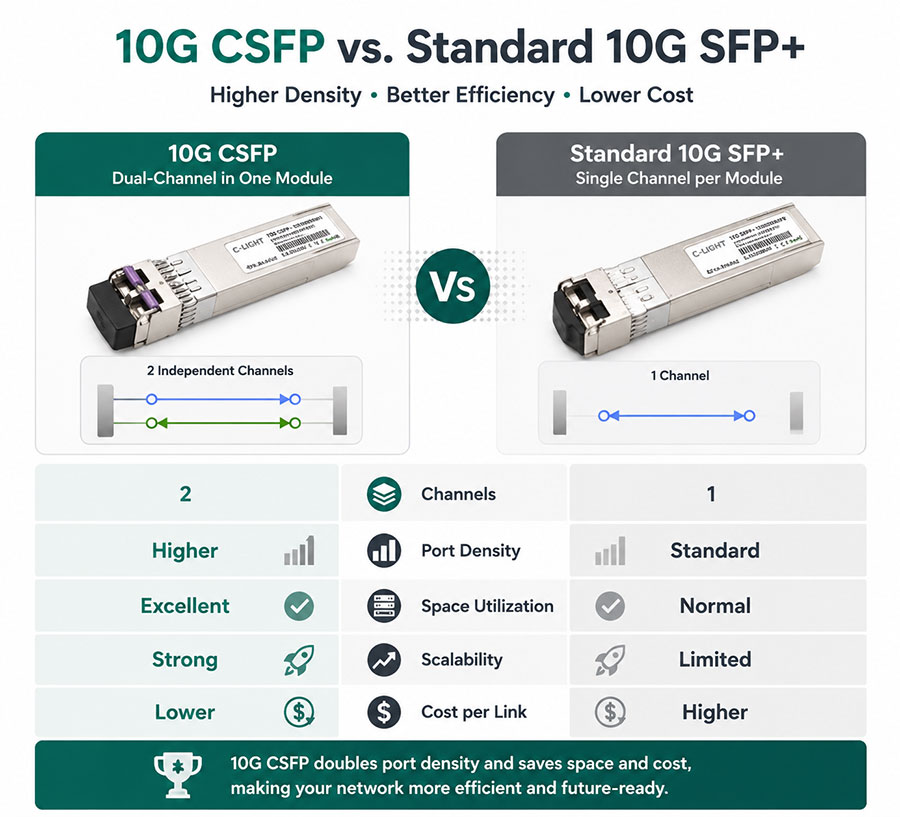
Traditional SFP+ modules support only one optical link per port. In contrast, CSFP (Compact Small Form-factor Pluggable)technology integrates two independent bidirectional transceivers into a single SFP-sized package.
This design enables higher access density without increasing the number of ports.
Similar to CSFP packaging, C-LIGHT also offers SFP56-DD and DSFP56 product series, which integrate two independent optical and electrical channels within one module.
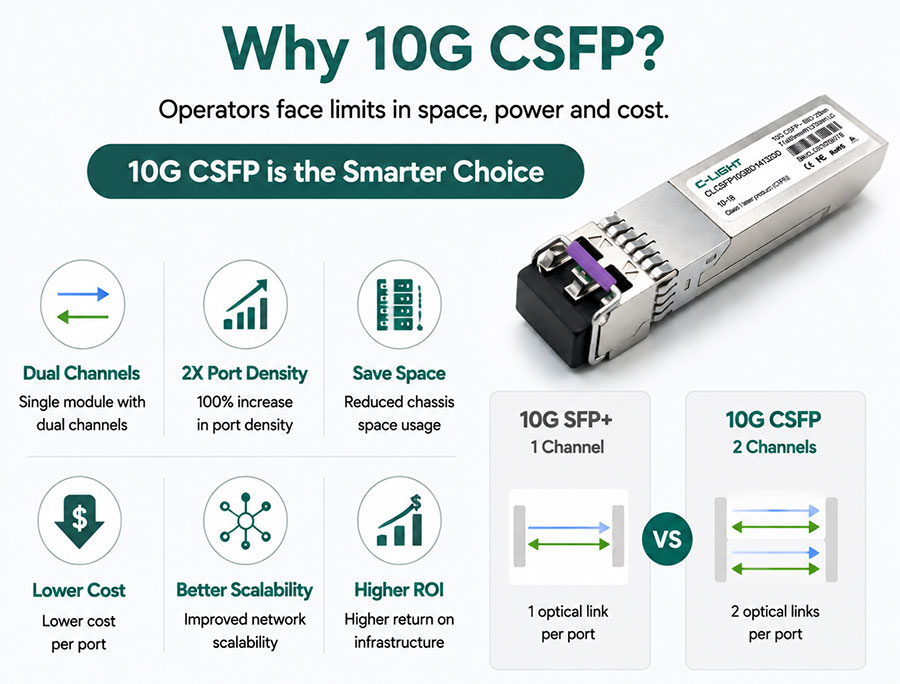
2. Why is 10G CSFP gaining attention from operators?
In real network deployments, space, power consumption, and investment cost are key constraints.
Key advantages of 10G CSFP:
Single module with dual channels
100% increase in port density
Reduced chassis space usage
Lower cost per port
Improved network scalability
Higher ROI for infrastructure
For carriers and large enterprise networks, CSFP effectively alleviates port resource limitations.
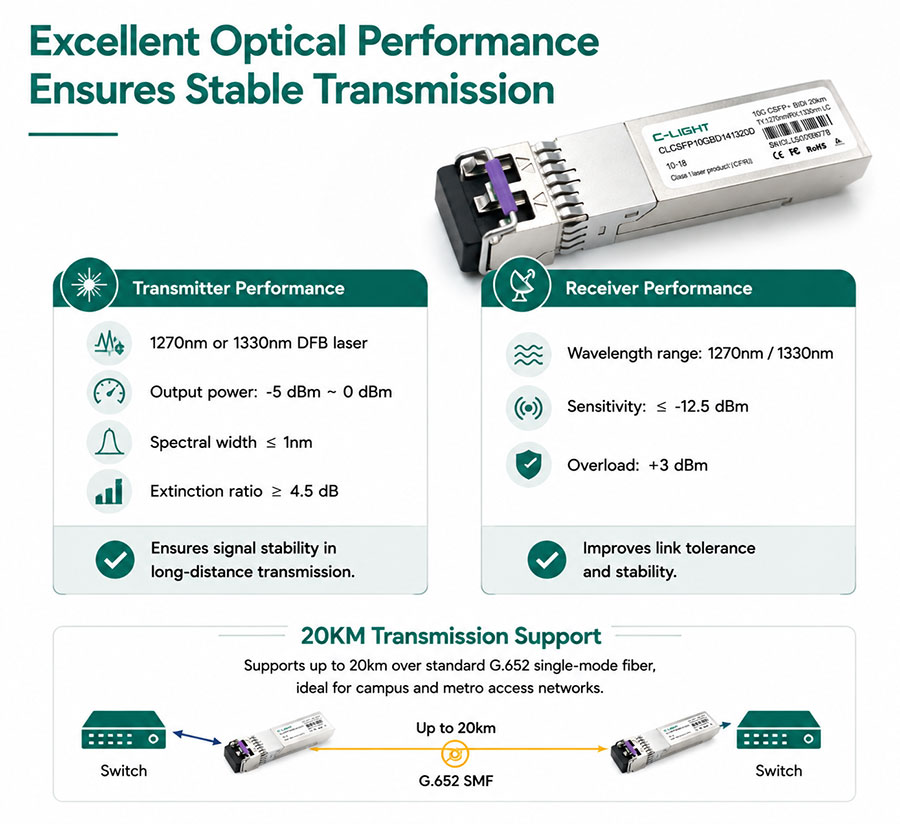
Ensures signal stability in long-distance transmission.
Receiver Performance
Wavelength range: 1270nm / 1330nm
Sensitivity: ≤ -12.5 dBm
Overload: +3 dBm
Improves link tolerance and stability.
20KM Transmission Support
Supports up to 20km over standard G.652 single-mode fiber, ideal for campus and metro access networks.
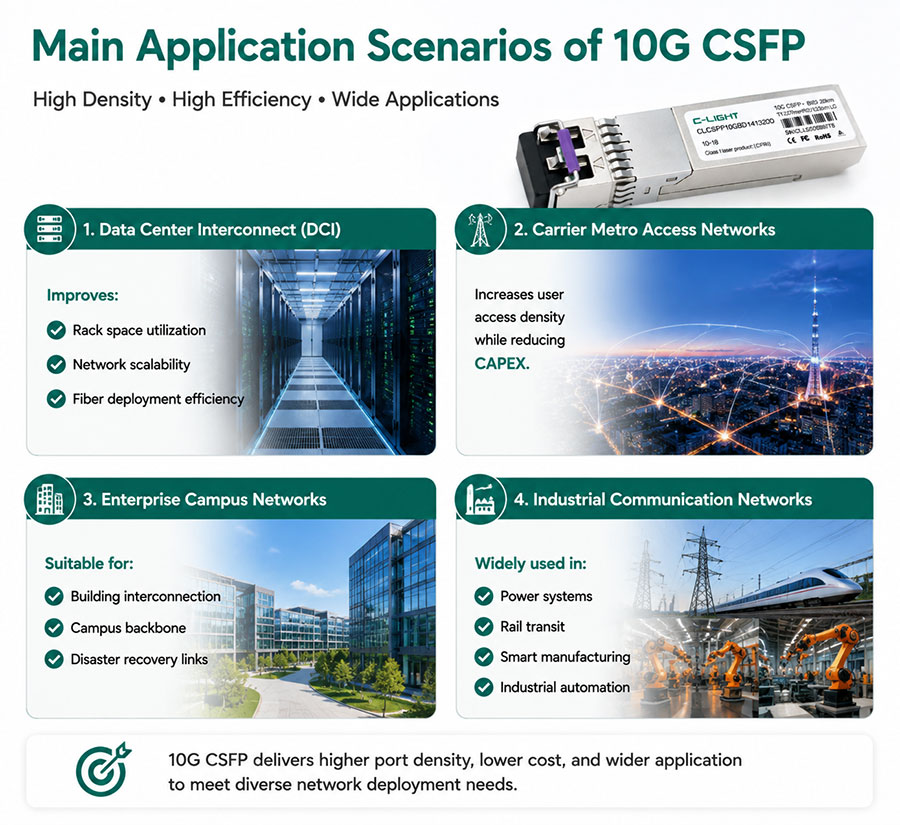
5. Main Application Scenarios of 10G CSFP
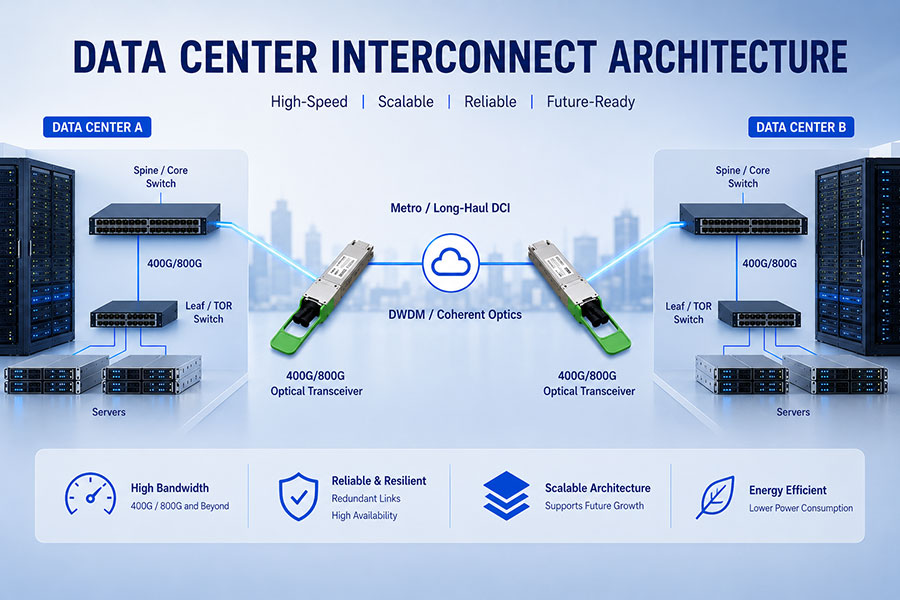
Data Center Interconnect (DCI)
Improves:
Rack space utilization
Network scalability
Fiber deployment efficiency
Carrier Metro Access Networks
Increases user access density while reducing CAPEX.
Enterprise Campus Networks
Suitable for:
Building interconnection
Campus backbone
Disaster recovery links
Industrial Communication Networks
Widely used in:
Power systems
Rail transit
Smart manufacturing
Industrial automation
6. 10G CSFP vs. Standard 10G SFP+
7. Why Choose C-LIGHT 10G CSFP?
Dual-channel high-density design
One module supports two independent 10G links.
Carrier-grade reliability
CSFP MSA 2.0 compliant
RoHS certified
FCC EMI compliant
Laser safety certified
DDM digital diagnostics
Real-time monitoring of temperature, voltage, TX/RX power reduces O&M costs.
Lower total cost of ownership
Expands capacity without adding extra switch ports.
8. Future Trends
Although 25G, 100G, and 400G technologies are rapidly evolving, 10G networks remain a core part of enterprise and carrier access infrastructure.
Due to its maturity, stability, low deployment cost, and strong compatibility, 10G CSFP will continue to play a key role in high-density access and fiber expansion scenarios.
For users seeking higher network density and better ROI, the C-LIGHT 10G CSFP 20KM dual-channel module is a highly efficient and reliable solution.
9. Frequently Asked Questions (FAQ)
Q1: Can a 10G CSFP module work in a standard SFP+ port?
A: Yes, but only Channel A will operate normally. CSFP modules have two channels (A/B via EEPROM mapping). Standard SFP+ ports provide only one channel, which aligns with Channel A. Channel B remains inactive due to lack of signal support.
Q2: What is the difference between 10G CSFP and 10G SFP+ BiDi modules?
A: The key difference is the number of independent channels per slot:
SFP+ BiDi: 1 fiber pair, 1 channel per slot
CSFP: integrates two independent BiDi transceivers, enabling 2 channels per slot and doubling port density
Q3: How to correctly pair 10G CSFP modules?
A: CSFP BiDi modules must be wavelength-matched. Example:
End A: Tx1270nm / Rx1330nm
End B: Tx1330nm / Rx1270nm
Q4: What type of fiber is required for 10G CSFP?
A: Single-mode fiber (SMF) is required to achieve 10km or 20km transmission distance.
Q5: What causes link failure or instability?
A: Common causes include:
Incorrect wavelength pairing
Wrong fiber type (not SMF)
Dirty or loose connectors
Optical power imbalance
Device incompatibility
Poor cooling conditions
Module failure (laser/receiver damage)
Q6: What should be considered when using a 20km module for short distances?
A: An optical attenuator is recommended to prevent receiver overload caused by excessive transmit power in short links.
Q7: Why choose 10G CSFP instead of buying a new switch?
A:
Reduces CAPEX by avoiding new high-density switches
Doubles port density without extra power or space
Optimizes existing fiber infrastructure using BiDi technology
For any questions, please contact us by email or WhatsApp.