 3-year warranty Long term maintenance
Technical Support Professional free technical guidance
100% detection Each module is 100% tested
Spot stock Always in stock, short delivery time
3-year warranty Long term maintenance
Technical Support Professional free technical guidance
100% detection Each module is 100% tested
Spot stock Always in stock, short delivery time
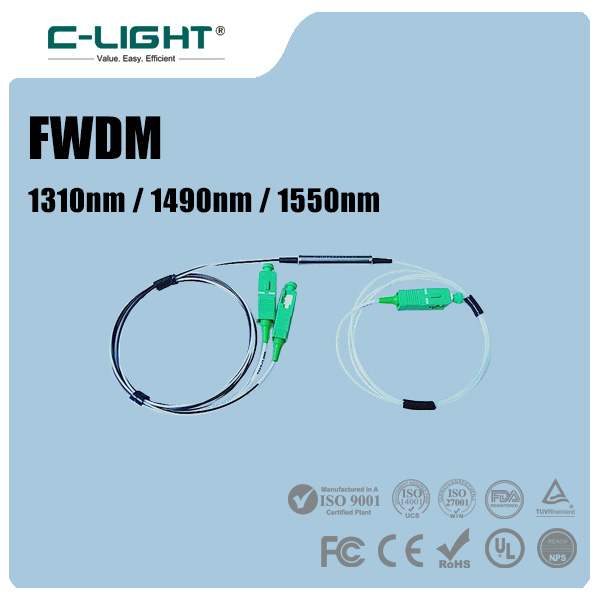
| Form Factor | Part No. | Wavelength | Diameter | Length | Connector | Note |
| FWDM | CLFWDM-F1 | 1310nm/1490nm/1550nm | Fiber Diameter Optional | Fiber Length Optional | Fiber Connector Optional | N/A |
FWDM (Filter Wavelength Division Multiplexer) is a passive wavelength division multiplexing device based on thin-film filter technology. It combines or separates specific optical wavelengths over a single fiber, with typical 1310nm, 1490nm, and 1550nm wavelength combinations for multi-service fiber networks. With low insertion loss, high channel isolation, and flexible fiber and connector options, FWDM is well suited for FTTH, PON, and CATV applications.
FWDM uses multi-layer dielectric thin-film filters to selectively transmit or reflect specific wavelengths for efficient optical signal multiplexing and demultiplexing.
The CLFWDM-F1 supports the 1310nm, 1490nm, and 1550nm wavelength combination commonly used for PON, FTTH, and CATV service integration.
Insertion loss is less than 0.5dB, helping maintain optical power while multiple wavelength services share the same fiber infrastructure.
Channel isolation greater than 30dB helps reduce wavelength crosstalk and supports stable transmission between different optical services.
CLFWDM-F1 is a filter wavelength division multiplexer supporting 1310nm/1490nm/1550nm wavelengths, with optional fiber diameter, fiber length, and fiber connector configurations.
The fiber diameter and length can be selected according to installation requirements, providing flexibility for integration into different optical modules and network equipment.
Fiber connector options can be customized to match the interfaces used in FTTH, PON, CATV, and other optical network equipment.
The passive filter-based architecture provides wavelength management without requiring active electrical power for the multiplexing or demultiplexing function.
Different optical signals are assigned to specific wavelengths and combined by the filter so that multiple services can travel through a single optical fiber.
At the receiving side, the filter separates the combined wavelengths and directs each optical service to its corresponding network equipment.
1310nm, 1490nm, and 1550nm signals can coexist on the same fiber, helping reduce the need for separate fiber infrastructure for different services.
High channel isolation helps minimize interference between wavelength channels and maintain stable multi-wavelength optical transmission.
FWDM can combine or separate optical wavelengths used for different services in fiber-to-the-home access networks.
The 1310nm and 1490nm wavelength paths can be integrated with other optical services through wavelength-selective filtering in PON networks.
The 1550nm optical wavelength commonly used for CATV can share fiber infrastructure with PON signals through FWDM wavelength multiplexing.
FWDM provides a practical passive solution for networks that need to carry multiple wavelength-based services over a common fiber link.
FWDM uses wavelength-selective filters for specific wavelength combinations such as 1310nm/1490nm/1550nm and is commonly used for FTTH, PON, and CATV service integration.
CWDM provides wider channel spacing across multiple wavelengths and is generally used when several optical channels need to share a fiber over metro or access links.
DWDM uses much narrower channel spacing to support high channel counts and high-capacity optical transmission over a shared fiber infrastructure.
FWDM is more focused on specific wavelength coexistence and service integration, while CWDM and DWDM are designed for broader multi-channel wavelength multiplexing requirements.
FWDM stands for Filter Wavelength Division Multiplexer. It uses optical filters to selectively combine or separate specific wavelengths.
The CLFWDM-F1 supports the 1310nm, 1490nm, and 1550nm wavelength combination.
The FWDM product has an insertion loss of less than 0.5dB.
The channel isolation is greater than 30dB, helping reduce crosstalk between different wavelength channels.
FWDM is commonly used in FTTH, PON, CATV, and other multi-service optical networks where different wavelengths need to share a single fiber.
FWDM provides a passive and compact solution for combining and separating specific optical wavelengths over a shared fiber. With 1310nm/1490nm/1550nm support, less than 0.5dB insertion loss, and more than 30dB channel isolation, it is well suited for FTTH, PON, CATV, and other multi-service fiber networks.
Contact Us

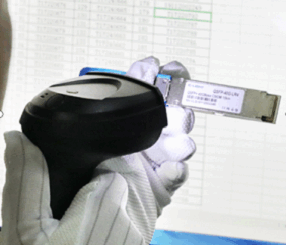

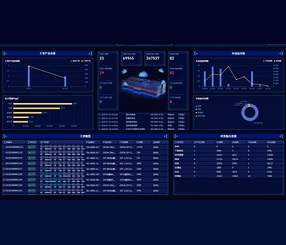
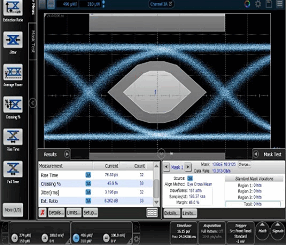
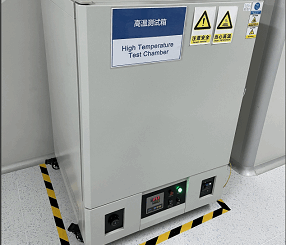
●100% of products pass initial test, final test and factory inspection.
●3-step quality control management process.
●100% complete implementation of customer order quality requirements.
●100% guarantee of customer product data information security.
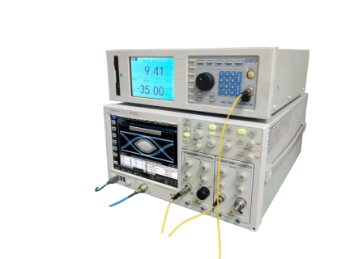
Please contact us to download the certification certificate.

Please Note: Installing a third party transceiver does not void your network equipment warranty. Network equipment manufacturers all have guidelines stating that warranty support on their products will not be affected.
 Contact Us
 Technical Support