
The 400G optical transceiver market is becoming an important part of high-speed data center networking, driven by AI infrastructure, cloud computing, hyperscale data centers, and increasing bandwidth requirements. As 800G and 1.6T technologies continue to develop, 400G remains widely used for data center interconnects, leaf-spine networks, server connectivity, and network upgrades.
400G optical transceivers provide up to 400Gbps aggregate data transmission and are designed for high-bandwidth Ethernet and data center applications. The market includes multiple form factors, optical architectures, transmission distances, and interface configurations.
Modern data centers require higher port bandwidth, greater network density, and efficient connectivity between switches, servers, storage systems, and accelerator platforms. 400G provides a practical bandwidth level between established 100G and 200G systems and newer 800G and 1.6T architectures.
Major market drivers include AI workloads, cloud infrastructure expansion, increasing east-west traffic, higher switch capacity, data center modernization, and the growing deployment of high-performance computing systems.
AI clusters generate substantial traffic between GPUs, switches, servers, and storage systems. 400G optical transceivers can provide high-speed connections within leaf-spine architectures and between network layers where large amounts of data must be transferred with low latency.
| Generation | Aggregate Data Rate | Typical Role |
|---|---|---|
| 100G | 100Gbps | Established data center networking |
| 200G | 200Gbps | Intermediate high-speed connectivity |
| 400G | 400Gbps | High-speed data center networking |
| 800G | 800Gbps | Large AI and hyperscale networks |
| 1.6T | 1.6Tbps | Next-generation high-density networks |
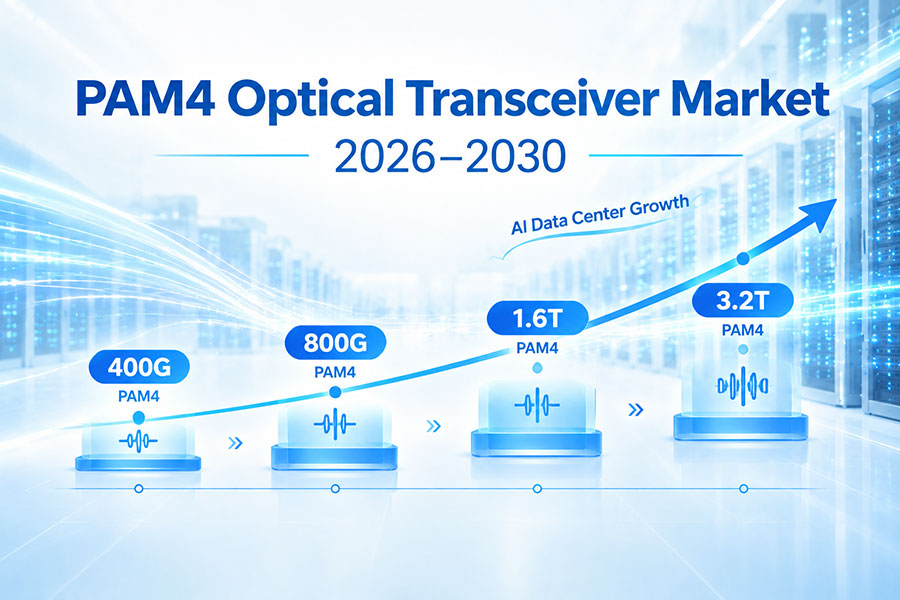
PAM4 is a key signaling technology used in many 400G optical platforms. It transmits two bits per symbol using four signal levels, allowing higher data rates per electrical or optical lane compared with traditional NRZ signaling.
A common 400G architecture uses eight 50Gbps electrical or optical lanes. PAM4 signaling allows each lane to achieve higher data throughput while maintaining a practical lane structure for high-speed switch and transceiver designs.
400G optical transceivers may use different laser and receiver technologies depending on transmission distance and application. Common technologies include VCSEL, EML, PIN photodetectors, and silicon photonics.
400G SR8 transceivers are designed for short-reach applications using multimode fiber. They are commonly used inside data centers where switch-to-switch or other high-speed links require relatively short transmission distances.
400G DR4 transceivers are designed for longer single-mode fiber links than short-reach multimode solutions. DR4 architectures typically use four optical lanes and are suitable for data center interconnects and high-density switch networks.
400G FR4 solutions use multiple wavelength channels around the 1310nm optical window to provide extended transmission distances over single-mode fiber. Their duplex LC interface makes them suitable for structured fiber cabling environments.
400G LR4 optical transceivers are intended for longer-distance single-mode fiber connections. They can be used where higher bandwidth must be delivered across larger areas within or between data center facilities.
OSFP is one of the major form factors used for high-speed optical connectivity. Its larger thermal envelope provides additional space for heat dissipation, making it suitable for demanding 400G, 800G, and future high-speed applications.
QSFP-DD provides eight high-speed electrical lanes in a compact form factor and maintains strong compatibility with existing QSFP-based network platforms. It is widely considered for 400G switching and data center deployments.
| Feature | 400G OSFP | 400G QSFP-DD |
|---|---|---|
| Lane Architecture | 8 high-speed lanes | 8 high-speed lanes |
| Thermal Capacity | Generally higher | Compact thermal design |
| Form Factor | Larger | More compact |
| Application | High-density and high-power platforms | Broad QSFP ecosystem |
| Typical Use | Data center and AI networking | Switch and data center networking |
Transmission distance varies significantly by optical technology. Short-reach multimode solutions are suitable for connections inside a rack or data center area, while DR4, FR4, and LR4 architectures support progressively longer single-mode fiber links.
Single-mode fiber is widely used for 400G links requiring higher transmission distances. It supports applications such as data center interconnects, leaf-spine networks, and connections between distributed facilities.
Multimode fiber can provide a cost-effective solution for short-reach 400G connectivity. OM4 fiber is commonly considered for high-speed short-distance data center links.
400G optical transceivers connect directly with high-speed switch ports and provide optical interfaces for data center networks. Their deployment depends on switch compatibility, port architecture, optical reach, connector type, and power budget.
Leaf-spine architectures require high-capacity connections between leaf and spine switches. 400G optical transceivers can increase uplink capacity while reducing the number of physical connections required compared with lower-speed interfaces.
400G technology can also be used for connections between data center locations. Depending on distance and network architecture, solutions may include direct optical links, wavelength-based transport, or coherent optical systems.
Power consumption is an important factor in high-speed optical networking. Module selection must consider transceiver power, switch power, cooling requirements, optical reach, and the overall power budget of the network platform.
Many 400G transceivers use digital signal processing to improve signal recovery and compensate for channel impairments. DSP functions may include equalization, clock recovery, signal conditioning, and support for high-speed PAM4 transmission.
Forward Error Correction helps improve link reliability by detecting and correcting transmission errors. FEC is especially important for high-speed PAM4 systems where signal integrity requirements become more demanding as data rates increase.
Signal integrity becomes increasingly important at 400G. PCB design, connector quality, electrical channel loss, crosstalk, insertion loss, jitter, and thermal conditions can all affect transceiver performance.
400G DAC solutions use copper conductors for very short connections and can provide low power and low latency. Optical transceivers use fiber and are better suited to longer distances and more flexible network layouts.
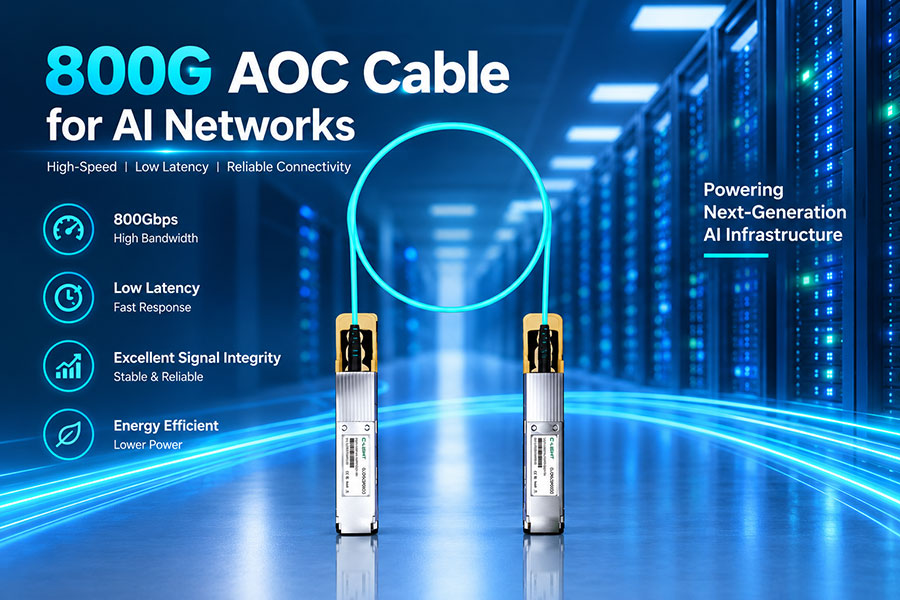
400G AOC assemblies integrate optical transceivers with fiber cables to provide longer short-reach connections than copper DAC solutions. They are suitable for switch-to-switch, server-to-switch, AI cluster, and HPC applications.
| Solution | Transmission Medium | Main Advantage | Typical Application |
|---|---|---|---|
| 400G DAC | Copper | Low power and low latency | Very short connections |
| 400G AOC | Optical fiber | Longer reach and flexibility | Data center interconnects |
| 400G AEC | Active copper | Extended copper reach | Short high-speed links |
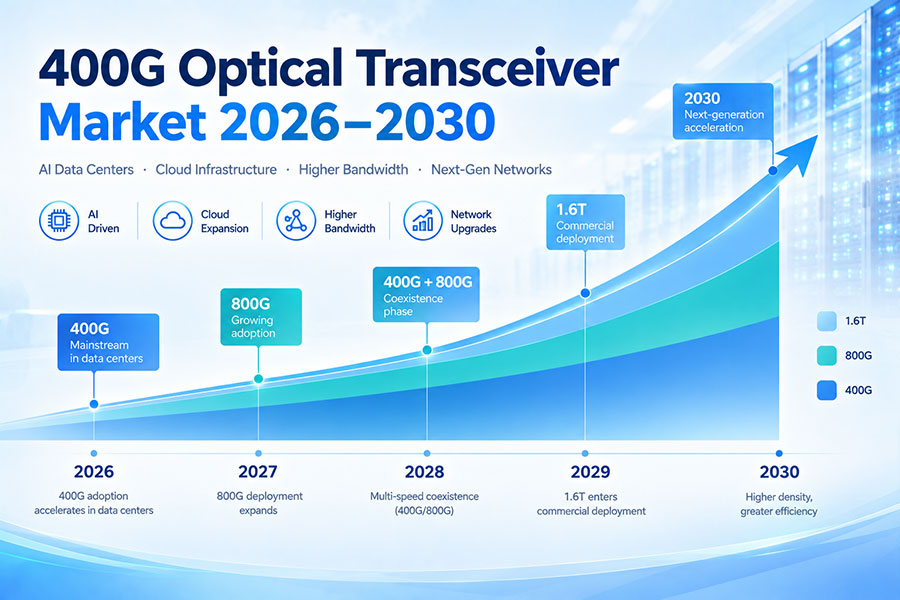
The 400G market is evolving alongside the migration toward 800G and 1.6T. Rather than disappearing immediately, 400G is expected to remain relevant across many network architectures where its bandwidth, power, reach, and cost provide a balanced solution.
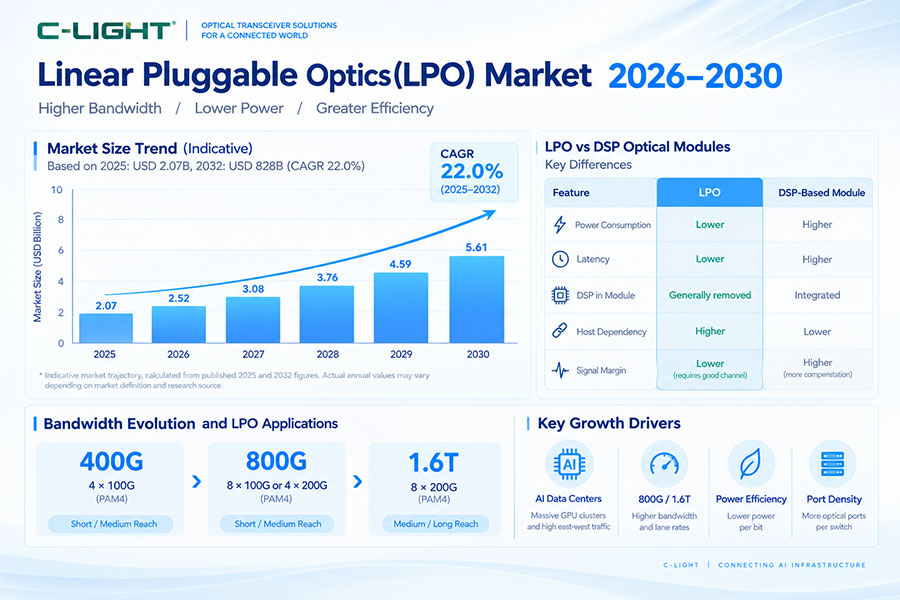
800G provides twice the aggregate bandwidth of 400G and is increasingly important for high-density AI and hyperscale networks. The growth of 800G does not eliminate 400G; instead, the two generations can coexist in different parts of the network.
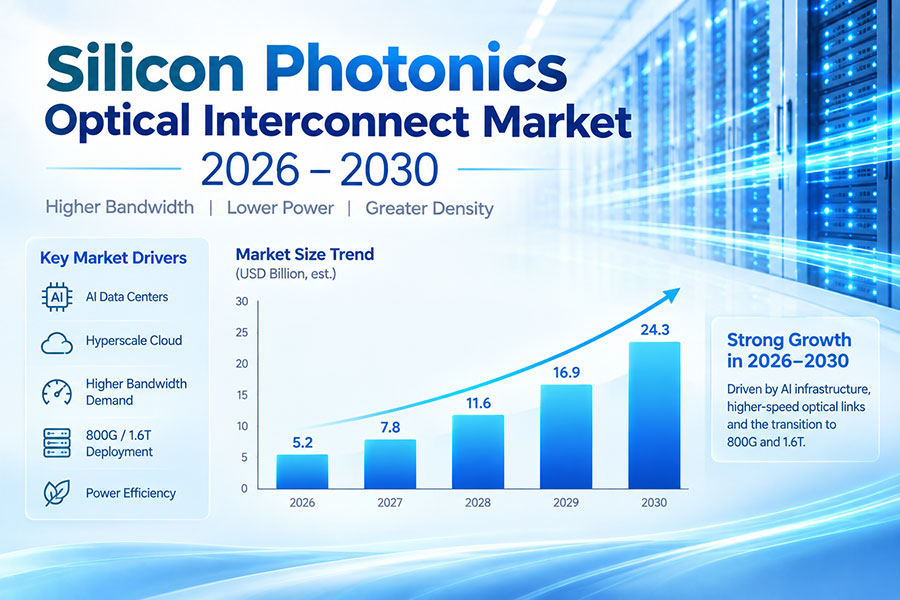
As switch bandwidth and AI cluster size increase, 1.6T optical connectivity is becoming part of the next-generation networking roadmap. The evolution from 400G to 800G and 1.6T is closely related to improvements in lane speeds, optical engines, DSPs, thermal management, and packaging.
Important selection factors include form factor, switch compatibility, optical reach, fiber type, connector, wavelength, power consumption, operating temperature, breakout requirements, and interoperability with the existing network.
Optical transceiver interoperability depends on electrical interfaces, optical specifications, MSA compliance, coding, firmware, and switch vendor requirements. Vendor compatibility testing is therefore important before large-scale deployment.
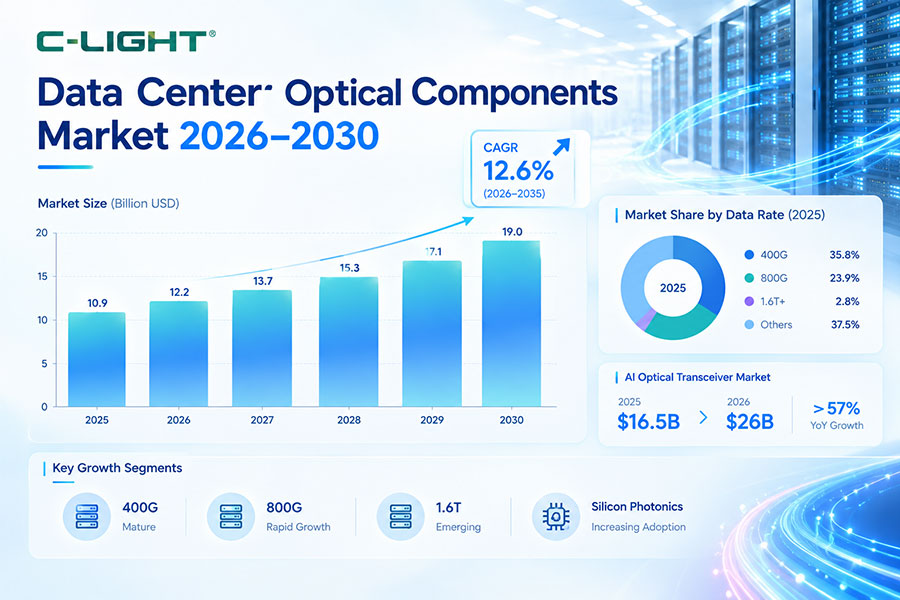
From 2026 to 2030, the 400G optical transceiver market is expected to remain closely connected with data center expansion, AI networking, cloud infrastructure, and the broader transition toward 800G and 1.6T. Market demand will increasingly depend on network architecture rather than bandwidth alone.
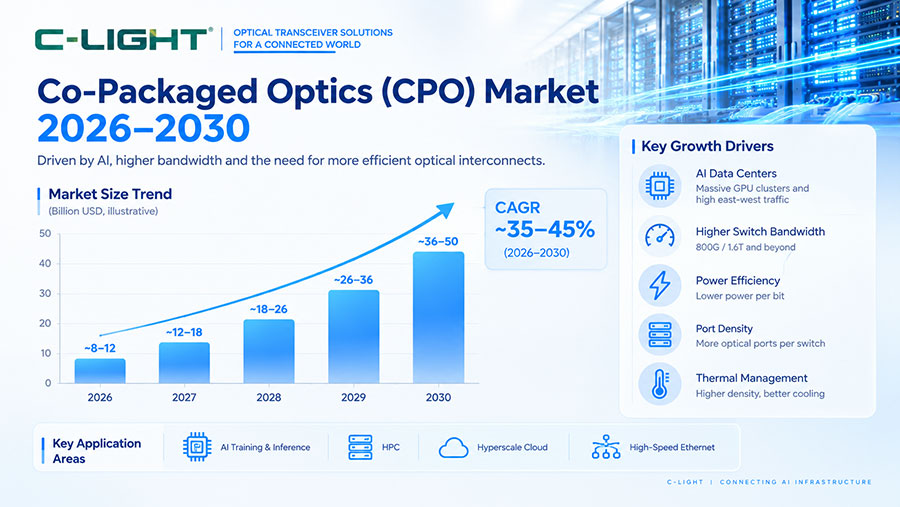
Future development will focus on improving power efficiency, optical performance, thermal management, packaging density, interoperability, and manufacturing scalability. Coexistence with linear optics, silicon photonics, advanced DSPs, and higher-speed optical platforms will shape the next stage of the market.
The 400G optical transceiver market remains an important part of high-speed optical networking. AI data centers, cloud platforms, hyperscale facilities, and data center interconnects continue to require higher bandwidth and efficient optical connectivity. While 800G and 1.6T are expanding into higher-density applications, 400G continues to provide a practical and flexible solution across many network environments.
For any questions, please contact us by email or WhatsApp.
Email: sales@c-light.com
WhatsApp: +86 132 6656 7067