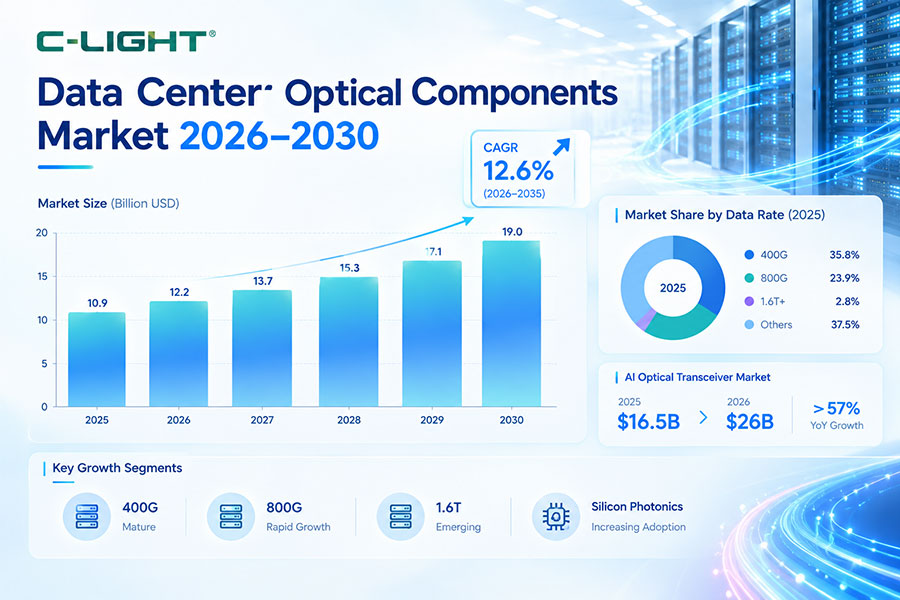
Driven by the dual demands of AI large model training and hyperscale data center construction, data transmission requirements are growing exponentially. Traditional copper cables have already reached performance bottlenecks in the 25G/50G era, while active optical cables (AOCs), leveraging optical transmission technology, overcome the limitations of physical media and have become the core solution for 100G/200G and higher-rate scenarios. According to forecasts, the global AOC market will reach USD 2.8 billion by 2025, with a compound annual growth rate (CAGR) of 32%. Within this market, the 400G AOC segment is entering a phase of rapid growth.
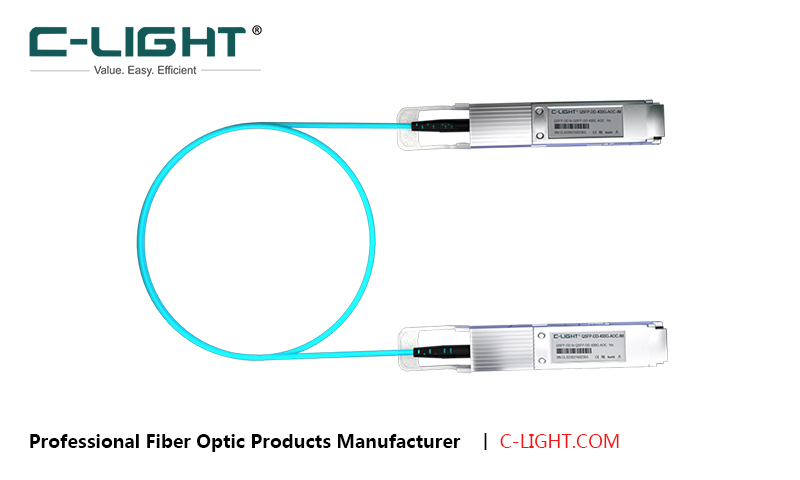
1、Core Working Principle
The 400G AOC adopts an "optical-to-electrical and electrical-to-optical" conversion architecture, highly integrating optical modules with fiber optic links. The core logic is as follows: at the signal transmitting end, the electrical signal is processed by a DSP (Digital Signal Processor) to drive a VCSEL laser array, converting it into an optical signal, which is then transmitted through multimode fiber to the receiving end. At the receiving end, a PIN photodetector converts the optical signal back into an electrical signal, and the DSP performs clock recovery and signal reshaping. This architecture effectively solves the issues of signal attenuation and electromagnetic interference found in traditional copper cables during high-speed transmission.
2、Key Packaging and Modulation Technologies
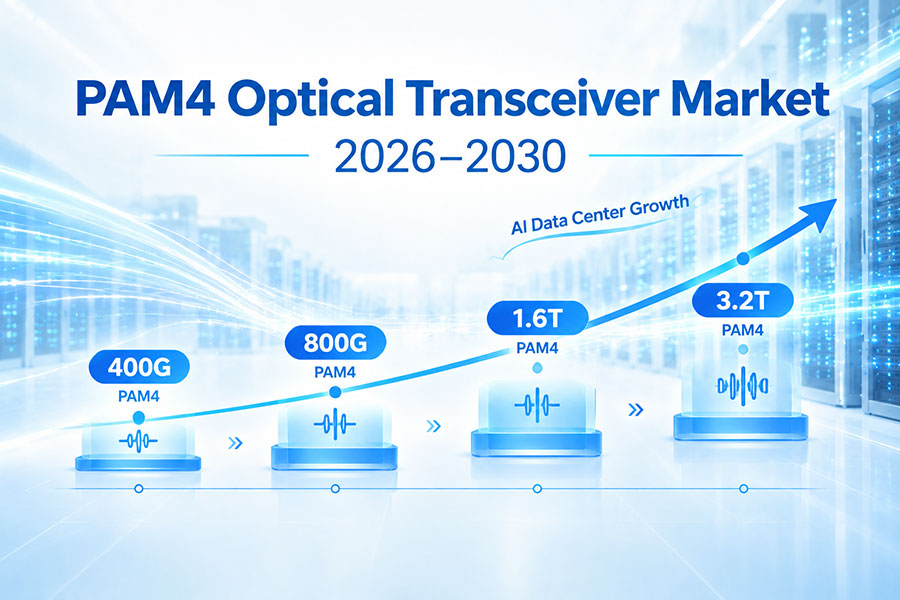
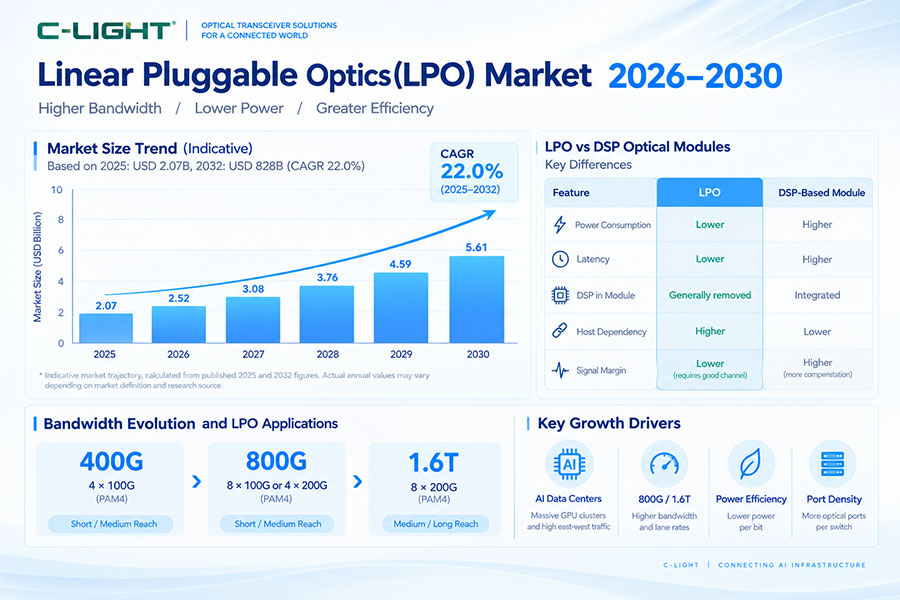
Currently, 400G AOCs mainly adopt two packaging standards: QSFP-DD and OSFP. Both support hot-plugging, feature compact form factors, and are suitable for high-density deployment. In terms of modulation technology, PAM4 is a key foundation of the 400G era. By transmitting 2 bits of information at the same baud rate, PAM4 doubles bandwidth utilization and serves as the core technology for breaking through the 400G rate bottleneck.
3、Key Performance Parameters
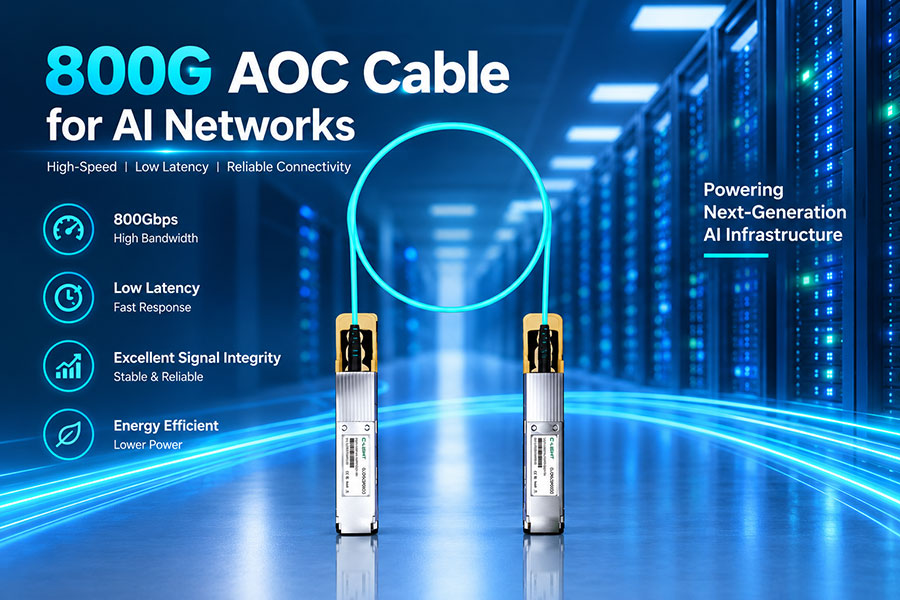
The C-LIGHT 400G AOC product features the following key parameters:
Data Rate: 400Gbps, with 4 × 106.25Gbps or 8 × 53.125Gbps PAM4 channel configurations
Transmission Distance: Up to 30 meters over OM3 multimode fiber
Operating Wavelength: 850nm VCSEL array paired with a PIN photodetector array
Power Consumption: Ranges from less than 8W to 11W for conventional products; hybrid architecture solutions can reduce it to 6.6W
Operating Temperature: 0°C to 70°C (commercial grade)
Standards Compliance: Conforms to IEEE 802.3bs, IEEE 802.3cm, IEEE 802.3db, IEEE 802.3ck, and QSFP-DD MSA specifications
4、Core Technology Components
The C-LIGHT 400G AOC integrates several advanced technologies. At the optical level, the 850nm VCSEL array provides multi-channel parallel transmission capability, with each channel reaching rates of up to 106.25Gbps. At the electrical level, the integrated DSP chip handles signal equalization, dispersion compensation, and noise suppression, making it a core component for maintaining high signal integrity. At the interface level, it supports the I2C management interface and digital diagnostic functions (DDM/DOM), enabling operations and maintenance personnel to monitor the cable's operating status in real time.