
DSP-based optical transceivers and LPO (Linear Pluggable Optics) are two different approaches to high-speed optical connectivity. The main difference is where signal processing and equalization are performed. Traditional DSP-based modules place substantial digital processing inside the transceiver, while LPO removes or bypasses module-level DSP and relies more heavily on the host SerDes.
DSP stands for Digital Signal Processor. In a high-speed optical transceiver, the DSP can perform functions such as equalization, signal conditioning, retiming, clock recovery, and other digital processing needed to maintain signal quality.
LPO stands for Linear Pluggable Optics. LPO is an optical-module architecture in which the module uses a more linear signal path and removes or bypasses the conventional module-level DSP or retimer. More of the signal-conditioning responsibility is moved to the host switch ASIC or SerDes.
As electrical and optical data rates increase, signals become more sensitive to insertion loss, reflections, crosstalk, jitter, and other impairments. A DSP can compensate for part of these effects and provide a more controlled electrical-to-optical interface.
At very high data rates, the DSP itself consumes power and generates heat. LPO attempts to simplify the module signal path by reducing module-level digital processing, making lower-power and lower-latency optical connectivity possible for suitable short-reach applications.
A simplified DSP-based module can be represented as:
Host ASIC → Electrical Channel → Module DSP → Optical Engine → Fiber
The receive path performs the reverse process:
Fiber → Optical Engine → Module DSP → Electrical Channel → Host ASIC
A typical LPO path is more linear:
Host ASIC SerDes → Electrical Channel → Linear Driver → Optical Engine → Fiber
On the receive side:
Fiber → Photodetector → TIA / Linear Receiver → Electrical Channel → Host SerDes
| Category | DSP-Based Optics | LPO |
|---|---|---|
| Module DSP | Integrated | Reduced or removed |
| Signal Processing | More processing inside module | More responsibility on host SerDes |
| Electrical Path | More tolerant of channel impairments | More sensitive to channel quality |
| Module Power | Generally higher | Generally lower |
| Module Latency | Higher due to processing | Lower module processing latency |
| Interoperability | More mature | More platform-dependent |
A DSP-based optical transceiver still depends on the host electrical channel, PCB, connector, firmware, fiber, and remote transceiver. The module DSP improves the signal boundary, but it does not eliminate the need for good system design.
LPO does not eliminate signal-integrity requirements. Instead, the host SerDes must handle a larger combined electrical channel that includes the switch package, PCB traces, connector, cage, and linear optical module.
The DSP is one of the major active components in many high-speed optical modules. Removing module-level DSP can reduce module power, although total power still depends on the driver, TIA, laser, control circuitry, thermal design, and the host system.
Power per bit is often more useful than absolute module power when comparing network generations. A higher-speed module can consume more total power while still providing better energy efficiency per transmitted bit.
DSP-based modules introduce processing delay through retiming and digital signal processing. LPO reduces this module-level processing path and can therefore provide lower transceiver latency. However, total network latency also includes switch processing, serialization, propagation, and other system delays.
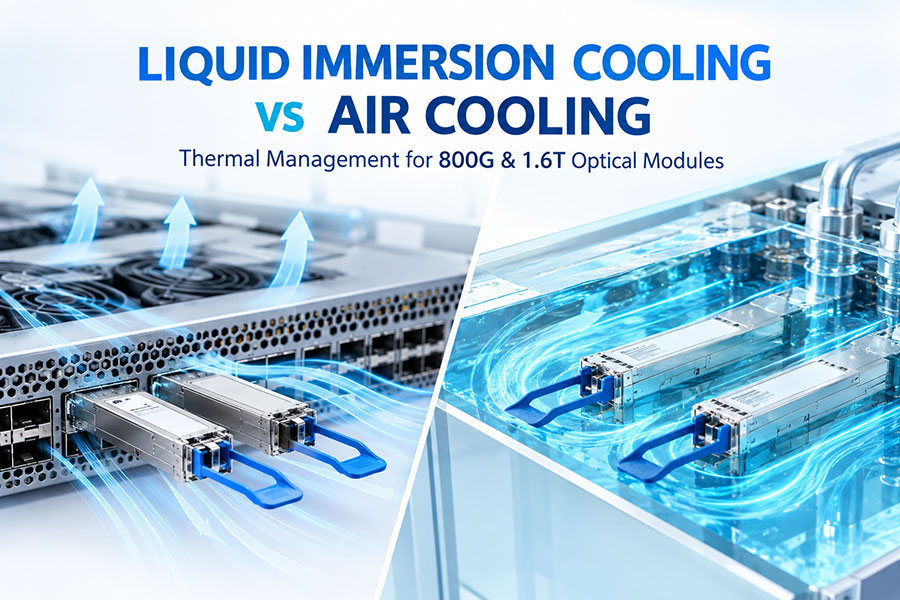
Lower module power generally reduces the amount of heat generated at the optical port. This can simplify thermal management in high-density switches, especially when large numbers of 800G or higher-speed optical modules are installed.
Signal integrity is one of the most important differences between DSP-based optics and LPO. A DSP can compensate for some electrical impairments, while LPO depends more directly on the quality of the host channel and the linear behavior of the optical module.
LPO requires a high-performance host SerDes capable of handling the complete electrical path. Equalization, channel loss compensation, and signal recovery become more dependent on the switching ASIC or network processor.
PCB traces, vias, connectors, packages, cages, and other interconnects introduce insertion loss. In an LPO architecture, these losses can have a greater direct influence on optical-link performance because there is less module-level digital compensation.
LPO is particularly relevant to modern PAM4 networking. PAM4 uses four signal levels to transmit two bits per symbol, but its smaller eye openings make the system more sensitive to noise, distortion, crosstalk, and channel loss.
DSP-based transceivers can use digital equalization and other signal-processing techniques to compensate for PAM4 impairments. This provides greater processing flexibility at the module boundary.
LPO uses a more linear PAM4 path. The host SerDes performs more of the electrical equalization, while the optical module primarily contains linear drivers, TIAs, lasers, photodetectors, and related control circuitry.
DSP-based architectures can support a wide range of optical reaches, including short-reach data center links and longer single-mode applications. LPO is generally better suited to controlled short-reach environments where the electrical channel can be tightly managed.
Longer optical links introduce additional impairments such as attenuation, dispersion, and reduced optical margin. Advanced signal processing can help manage these conditions, which is one reason conventional DSP-based architectures remain important for many longer-reach applications.
DSP-based modules create a stronger functional boundary between the host and optical engine. LPO has tighter coupling between host SerDes, electrical channel, module analog characteristics, firmware, and optical path, making platform-level validation more important.
For an LPO deployment, the host platform should be explicitly validated for the intended module. The switch ASIC, SerDes configuration, PCB channel, connector, cage, firmware, and optical module must work together within the required signal margin.
LPO does not mean that module management disappears. Monitoring, identification, alarms, temperature data, optical power, and other management functions can still be provided through the module management interface.
DSP-based modules can provide extensive information about the internal signal-processing path depending on the implementation. LPO designs may provide fewer internal digital-processing diagnostics, increasing the importance of host counters, optical measurements, eye analysis, and system-level testing.
Both architectures can be designed for reliable operation. DSP-based modules contain more active processing electronics, while LPO simplifies some module circuitry but creates tighter dependencies on host-channel quality and system integration.
Removing the module DSP can simplify part of the optical module electronics. However, LPO does not automatically make the complete manufacturing process simple because optical alignment, packaging, testing, electrical validation, and system qualification remain important.
DSP-based modules contain additional high-speed processing silicon, which can increase module cost and power. LPO can reduce some module components, but the total system cost depends on host ASIC capability, validation requirements, production volume, optical engine design, and deployment architecture.
Both DSP-based and linear optical architectures can be applied to 400G networking. The appropriate architecture depends on reach, host capability, channel quality, power targets, and interoperability requirements.
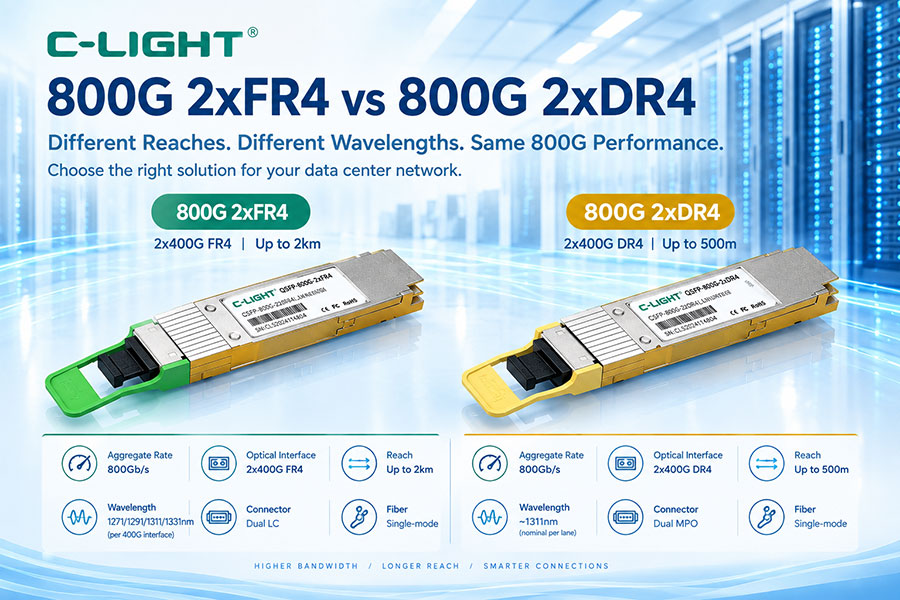
800G has become an important area for LPO development because the power and thermal impact of high-speed optical modules increases as port density grows. LPO is particularly relevant to short-reach AI and data center fabrics with controlled host platforms.
At 1.6T, higher lane rates and increased thermal density make signal integrity and power efficiency even more important. Both DSP-based and linear approaches are being developed for these networks, with the appropriate choice depending heavily on system architecture.
AI clusters often use large numbers of high-speed links between GPUs, NICs, leaf switches, and spine switches. In short-reach environments, reducing optical module power can be valuable because the cumulative thermal load increases rapidly with port count.
Short-reach links can provide a more controlled environment for LPO because the optical distance is limited and the host architecture can be standardized. DSP-based optics remain useful when additional signal-processing margin or broader interoperability is required.
Long-reach applications generally place greater demands on optical performance and signal processing. DSP-based architectures therefore remain important for many longer-distance and more complex optical links, while LPO is generally focused on shorter controlled channels.
| Architecture | Module DSP | Signal Processing | Typical Position |
|---|---|---|---|
| DSP Optics | Yes | Mostly inside module | Broad applications |
| LRO | Partial / reduced | Combination of module and host | Intermediate architecture |
| LPO | Removed or bypassed | More dependent on host SerDes | Controlled short-reach links |
DSP and LPO mainly describe how a pluggable optical link handles signal processing. CPO, or Co-Packaged Optics, describes integration of optical engines close to the switching ASIC. Silicon photonics can be used in either pluggable or co-packaged architectures.
Silicon photonics and LPO describe different technology layers. A silicon photonic optical engine can be used in an LPO module, provided the complete electrical and optical architecture supports the required performance.
When evaluating DSP versus LPO, consider host SerDes capability, electrical channel loss, optical reach, lane rate, PAM4 performance, module power, thermal limits, latency, management, interoperability, FEC requirements, monitoring, and qualification resources.
An LPO evaluation should test the complete link rather than the module alone. Important measurements can include BER, eye quality, electrical channel margin, optical power, temperature, FEC counters, host SerDes settings, and performance across operating conditions.
DSP and LPO represent different approaches to high-speed optical transceiver architecture. DSP-based modules place substantial signal processing inside the transceiver, providing stronger module-level signal conditioning and broad application flexibility. LPO reduces or removes module-level DSP and shifts more responsibility to the host SerDes, allowing lower module power and lower processing latency in suitable systems. The tradeoff is greater sensitivity to electrical channel quality, host capability, interoperability, and system-level validation. For 400G, 800G, and emerging 1.6T networks, the appropriate architecture depends on reach, host design, power targets, thermal constraints, signal integrity, and deployment conditions rather than data rate alone.
For any questions, please contact us by email or WhatsApp.
Email: sales@c-light.com
WhatsApp: +86 132 6656 7067