
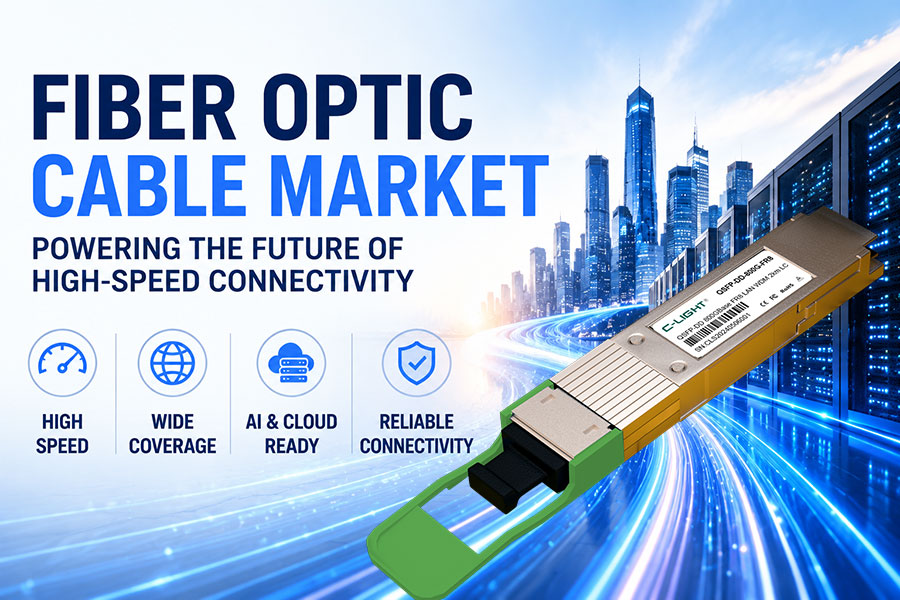
The global fiber optic cable market is experiencing rapid growth driven by artificial intelligence (AI), cloud computing, 5G networks, hyperscale data centers, and digital transformation. As global data traffic continues to increase, optical fiber infrastructure has become essential for supporting high-speed, reliable, and scalable communication networks.
Fiber optic cables provide superior bandwidth, low transmission loss, long-distance capability, and strong resistance to electromagnetic interference. These advantages make optical fiber a critical foundation for telecommunications, enterprise networks, and next-generation AI data centers.
The demand for high-speed connectivity is accelerating worldwide. Traditional copper-based solutions are facing limitations in bandwidth, distance, and power efficiency, while fiber optic technology continues to evolve to meet the requirements of modern digital infrastructure.
With the rapid expansion of AI workloads and large-scale computing systems, fiber optic cables are becoming increasingly important for connecting servers, switches, storage systems, and data centers.
Artificial intelligence is one of the strongest growth drivers for the fiber optic cable market. Modern AI clusters contain thousands of GPUs that require continuous high-speed communication during training and inference.
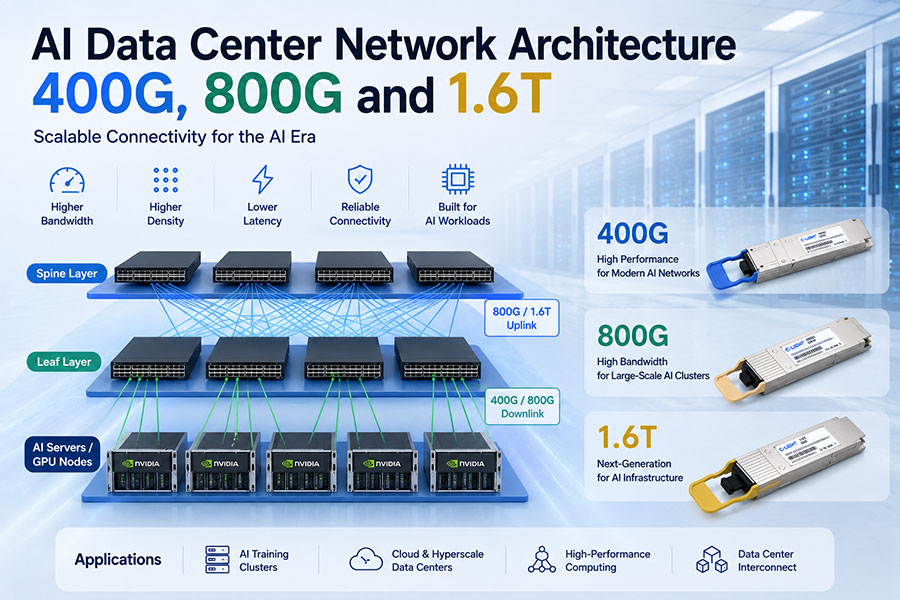
AI networks generate massive east-west traffic between GPU servers, switches, and storage systems. This requires optical connectivity solutions with higher bandwidth, lower latency, and improved scalability.
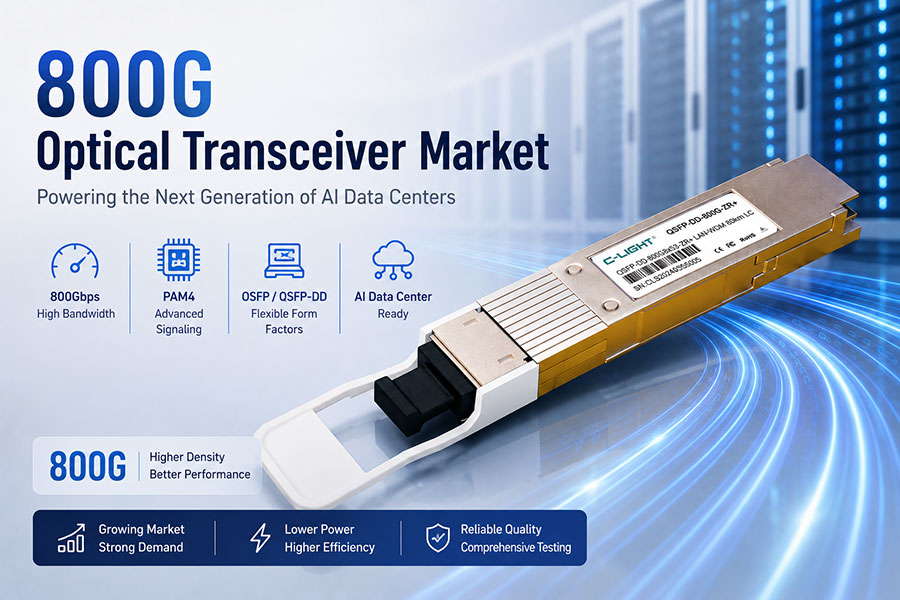
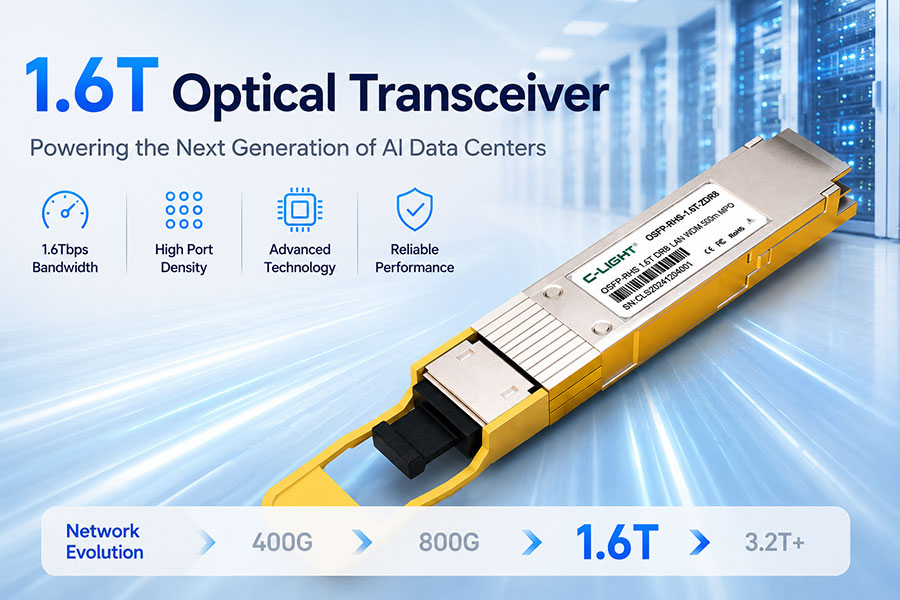
The transition from 400G to 800G and 1.6T optical networks is increasing demand for advanced fiber optic cable infrastructure capable of supporting next-generation AI data centers.
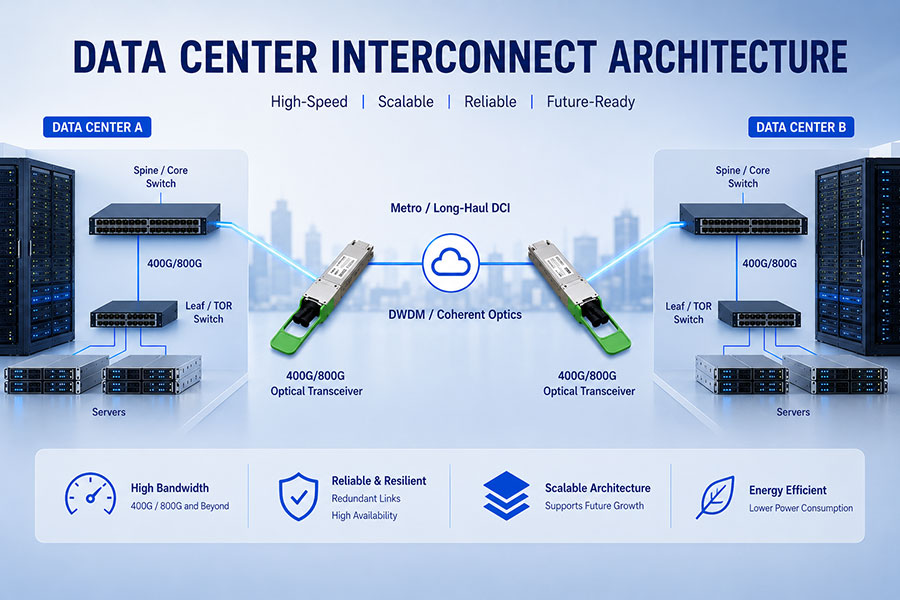
Cloud computing providers and hyperscale data centers continue expanding their infrastructure worldwide. These facilities require large amounts of fiber optic cables for server connections, data center interconnects (DCI), and high-speed backbone networks.
Fiber optic cables enable higher capacity and longer transmission distances compared with traditional copper solutions, making them the preferred choice for modern cloud networking environments.
The global deployment of 5G networks and fiber-to-the-home (FTTH) infrastructure is also contributing to market growth. Telecom operators are investing heavily in optical fiber networks to support increasing bandwidth requirements from consumers and businesses.
Single-mode fiber is widely used in long-distance communication, telecom backbone networks, data center interconnects, and high-speed optical networks.
Key advantages include:
Long transmission distance
Low optical signal loss
High bandwidth capability
Support for 400G, 800G, and future optical networks
Multi-mode fiber is mainly used for short-distance applications such as enterprise networks, server rooms, and data center environments.
Common multi-mode fiber types include OM3, OM4, and OM5. These solutions provide cost-effective connectivity for short-reach applications.
As AI data centers require more optical connections, high-density fiber cable solutions are becoming increasingly important.
These cables provide:
Higher fiber counts
Compact cable designs
Easier installation and management
Better scalability for future networks
AI clusters require significantly more optical connections than traditional data centers. Higher GPU density and larger AI models are driving demand for advanced fiber management solutions.
Future AI data centers will require optical cables with higher fiber counts, smaller diameters, and improved deployment efficiency.
The evolution of AI networking is accelerating the adoption of higher-speed optical technologies:
100G optical connectivity
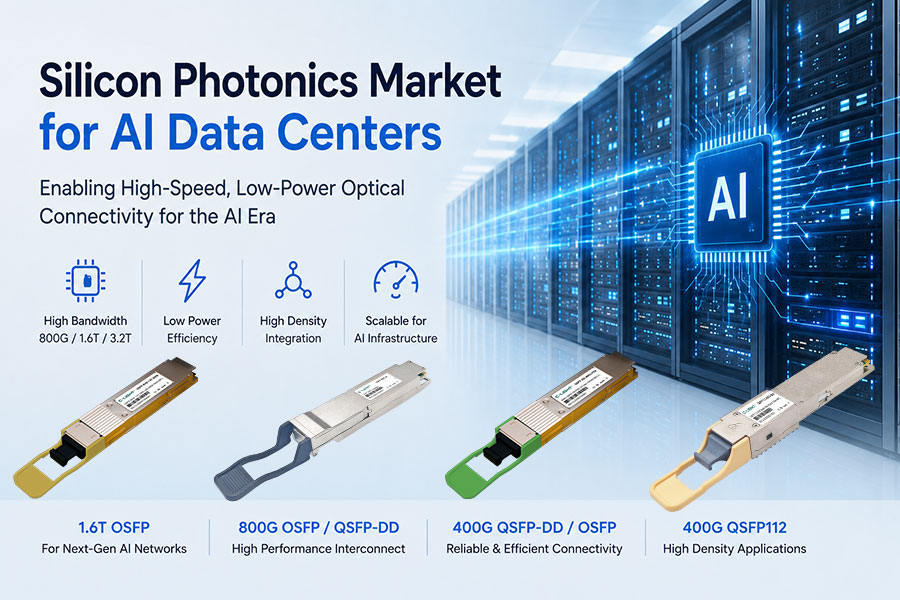
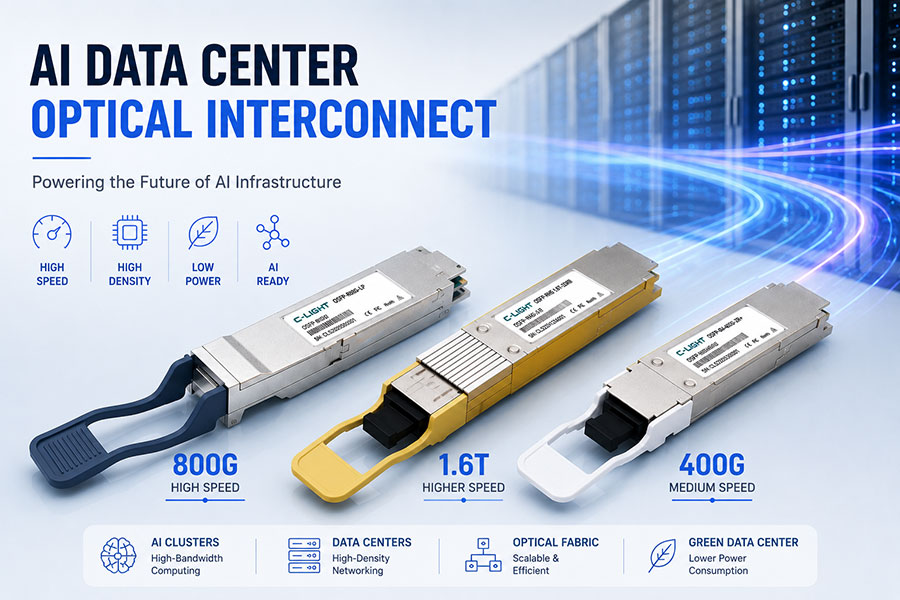
400G optical connectivity
800G optical connectivity
1.6T optical connectivity
Advanced fiber optic cables provide the foundation for these high-speed optical modules by ensuring reliable signal transmission and scalable network performance.
Data centers are among the fastest-growing applications for fiber optic cables. Optical fiber is widely used for:
AI cluster networking
Cloud computing infrastructure
Storage networks
High-performance computing systems
Telecommunication providers use fiber optic cables for backbone networks, metro networks, 5G transport, and broadband access systems.
Fiber optic cables are increasingly adopted in enterprise and industrial environments because of their reliability, high bandwidth, and resistance to electromagnetic interference.
The rapid growth of AI data centers has increased demand for optical fiber production capacity. Manufacturers need to improve supply chain efficiency and expand production capabilities to meet market requirements.
Large-scale optical networks require professional installation, accurate fiber management, and advanced testing technologies. As fiber density increases, cable organization becomes more challenging.
Although fiber optic technology provides long-term benefits, reducing deployment costs remains an important challenge. The industry continues improving manufacturing processes and network designs to achieve better cost efficiency.
Future optical networks will require higher-density cable solutions to support increasing bandwidth demand while reducing installation space requirements.
Advanced optical fiber technologies are focusing on reducing signal loss, improving transmission efficiency, and supporting higher-speed communication systems.
Fiber optic cables will continue evolving together with optical transceivers, DAC, AOC, and AEC solutions to create complete connectivity systems for AI data centers.
C-LIGHT provides advanced optical connectivity solutions designed for modern communication networks and AI data center infrastructure.
The product portfolio includes:
400G optical transceivers
800G optical modules
1.6T optical connectivity solutions
High-speed DAC, AOC, and AEC solutions
Customized optical interconnect solutions
By supporting high-bandwidth and scalable network architectures, C-LIGHT helps customers build reliable optical infrastructure for AI computing, cloud networks, and next-generation data centers.
The fiber optic cable market will continue expanding as AI computing, cloud services, and high-speed networking technologies accelerate global digital transformation.
Future networks will require higher bandwidth, lower latency, greater fiber density, and more efficient optical connectivity solutions. From telecom infrastructure to AI data centers, fiber optic cables will remain a critical technology supporting the next generation of communication networks.
Answer: The major growth drivers include AI data centers, cloud computing, 5G networks, broadband expansion, and increasing global data traffic.
Answer: AI clusters require extremely high bandwidth communication between GPUs, switches, and storage systems. Fiber optic cables provide the speed, reliability, and scalability required for AI workloads.
Answer: Single-mode fiber supports longer distances and higher bandwidth, while multi-mode fiber is mainly used for shorter-distance applications in enterprise and data center environments.
Answer: AI clusters require thousands of optical connections, increasing demand for high-density fiber cables and advanced optical infrastructure.
Answer: Advanced single-mode fiber, low-loss fiber, and high-density optical cables provide the infrastructure required for next-generation high-speed networks.
Answer:
AI data centers
Cloud computing networks
Telecommunication infrastructure
Enterprise networks
Industrial communication systems
Answer: Future trends include higher fiber density, lower optical loss, advanced cable designs, and integration with high-speed optical interconnect solutions.
Answer: C-LIGHT provides high-performance optical transceivers and connectivity solutions for AI data centers, cloud networks, and next-generation optical communication systems.
For any questions, please contact us by email or WhatsApp.
Email: sales@c-light.com
WhatsApp: +86 132 6656 7067