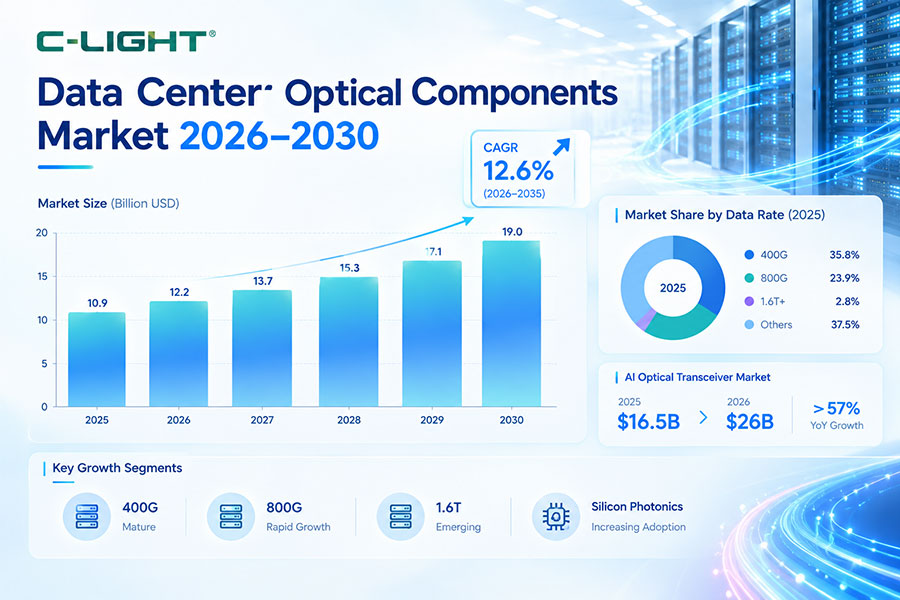

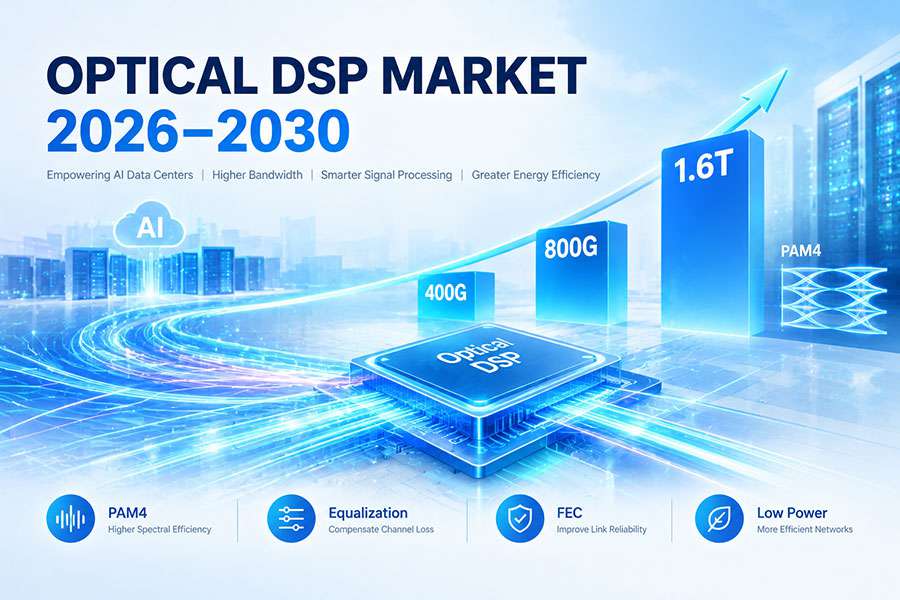
The optical DSP market is expanding with the growth of 400G, 800G, and 1.6T optical connectivity, driven by AI data centers, cloud networking, high-speed Ethernet, and data center interconnects.
The optical DSP market covers digital signal processors used in optical transceivers, active cables, and other high-speed optical communication systems. Optical DSPs process high-speed electrical and optical signals to improve transmission performance and link reliability.
Higher data rates create greater challenges for signal integrity, equalization, timing recovery, and error correction. As optical networks move toward higher speeds, DSP technology becomes an important part of many transceiver architectures.
AI data centers require high-bandwidth connections between GPUs, switches, servers, and racks. The rapid deployment of 800G and emerging 1.6T optical connectivity is increasing demand for high-performance DSP solutions.
400G optical DSPs remain important across data center, Ethernet, and telecom applications. They support high-speed optical modules while providing the signal processing required for reliable multi-lane transmission.
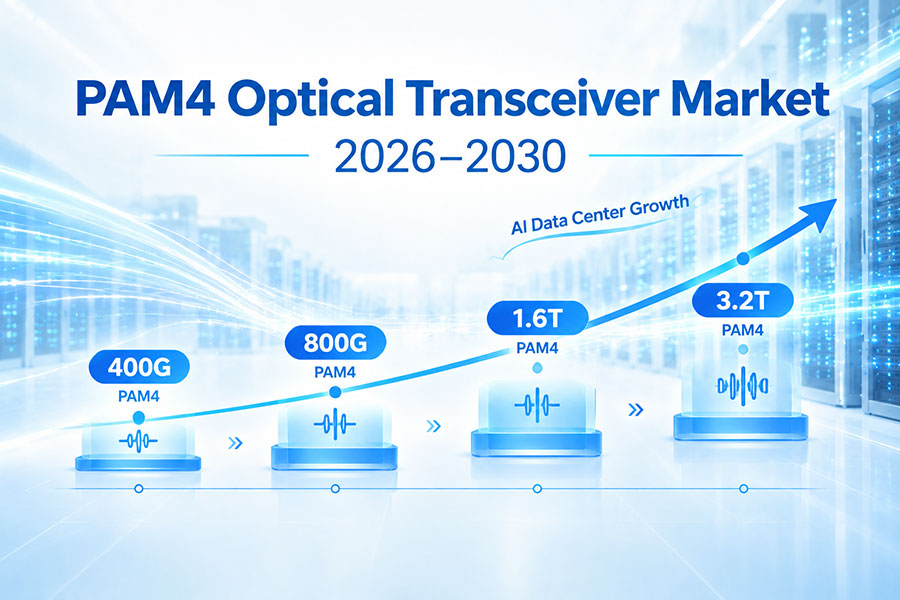
800G is one of the most important growth areas for optical DSPs. Eight-lane 100G-class PAM4 architectures provide the bandwidth required by modern AI and hyperscale data center networks.
1.6T represents the next major stage of optical connectivity. A common architecture uses eight 200G-class PAM4 lanes, requiring advanced DSP capabilities for signal processing, equalization, and link management.
PAM4 allows two bits to be transmitted per symbol and increases data capacity without proportionally increasing the signaling bandwidth. DSPs help compensate for the additional signal integrity challenges introduced by PAM4 transmission.
112G-class PAM4 signaling has become an important technology for 800G optical connectivity. DSPs operating at this level require efficient equalization and signal processing to maintain link performance.
200G-per-lane signaling is becoming important for 1.6T optical systems. It increases the bandwidth of each optical lane while placing greater requirements on DSP performance, power efficiency, and optical component quality.
Typical optical DSP functions include equalization, clock and data recovery, signal conditioning, forward error correction, monitoring, and compensation for transmission impairments.
Equalization compensates for frequency-dependent loss and other channel impairments. It is particularly important in high-speed electrical interfaces where PCB traces, connectors, cables, and packaging can affect signal quality.
FEC enables the receiver to detect and correct certain transmission errors. Combining DSP functions with FEC helps high-speed optical links achieve reliable operation within practical optical and electrical margins.
As transmission speeds increase, signal distortion and loss become more difficult to manage. DSP provides electronic compensation that helps maintain signal quality across the host interface and optical link.
Power efficiency is a major consideration in optical DSP development. AI data centers deploy large numbers of optical ports, so even small reductions in power per module can have a significant impact on overall network energy consumption.
Future DSP designs are expected to focus on higher processing efficiency, advanced semiconductor processes, optimized architectures, and lower power consumption per transmitted bit.
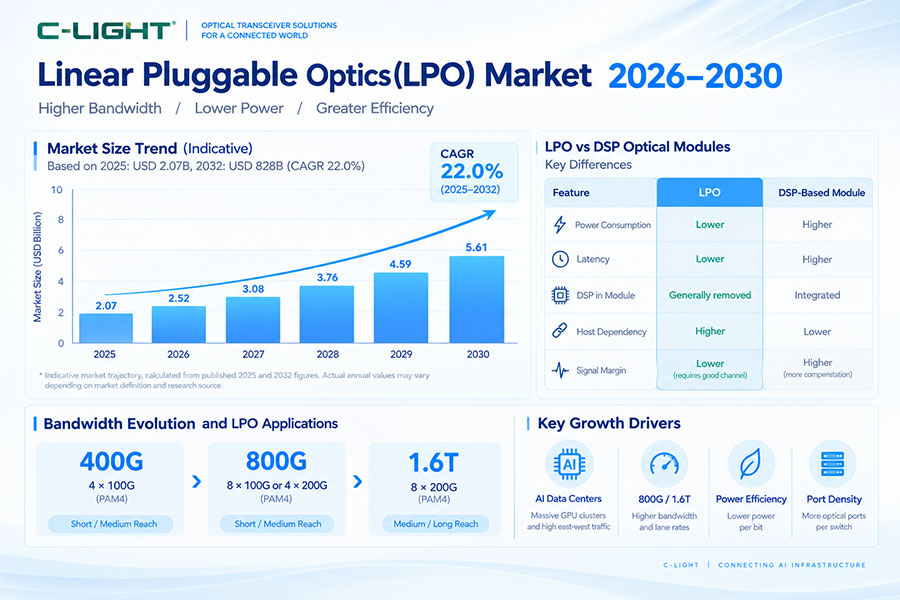
LPO reduces or removes some traditional DSP functions from the optical module and relies more heavily on the host electrical system. This can reduce power and latency in suitable applications, but it also places greater requirements on the overall link design.
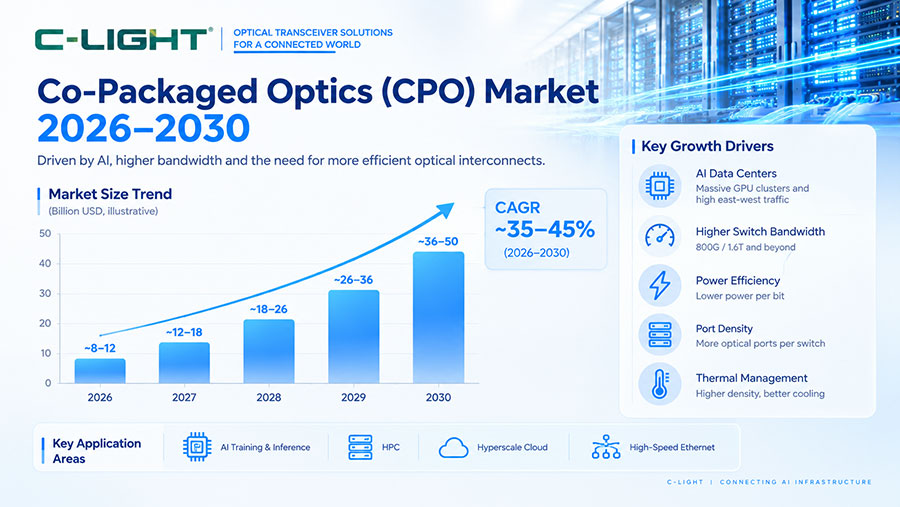
Co-Packaged Optics integrates optical engines closer to the switching ASIC. This architecture can reduce electrical reach between the switch chip and optical interface and may change how DSP functions are implemented in future systems.
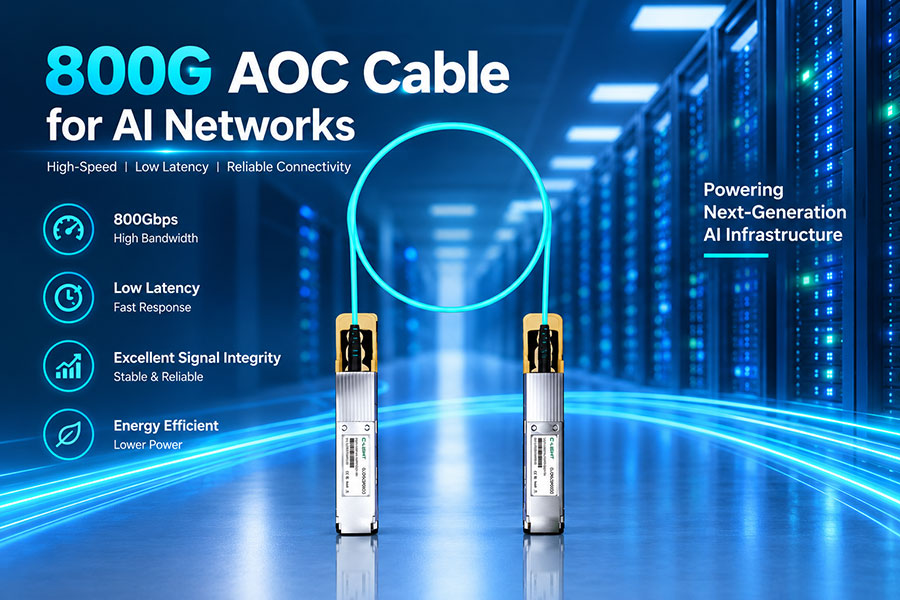
DSP technology can also be used in AOC, AEC, and ACC solutions to improve signal quality and extend high-speed connectivity. AI clusters are creating additional demand for these active interconnect technologies.
Ethernet remains a major application for optical DSPs. High-speed 400G, 800G, and 1.6T Ethernet systems require advanced signal processing to support increasing bandwidth and network density.
AI and HPC clusters also use InfiniBand for high-performance accelerator networking. Optical DSP solutions can support high-speed optical links used in these demanding computing environments.
Data center interconnects require reliable optical transmission across longer distances. DSPs help compensate for transmission impairments and support advanced coherent and high-speed direct-detection optical systems.
Coherent optical DSPs process complex optical signals and support high-capacity transmission across metro, DCI, and long-haul networks. Coherent DSP demand remains an important part of the broader optical chipset market.
PAM4 DSPs are strongly associated with short-reach and data center optical connectivity, while coherent DSPs are widely used for longer-reach optical transmission. Their architectures and processing requirements are different.
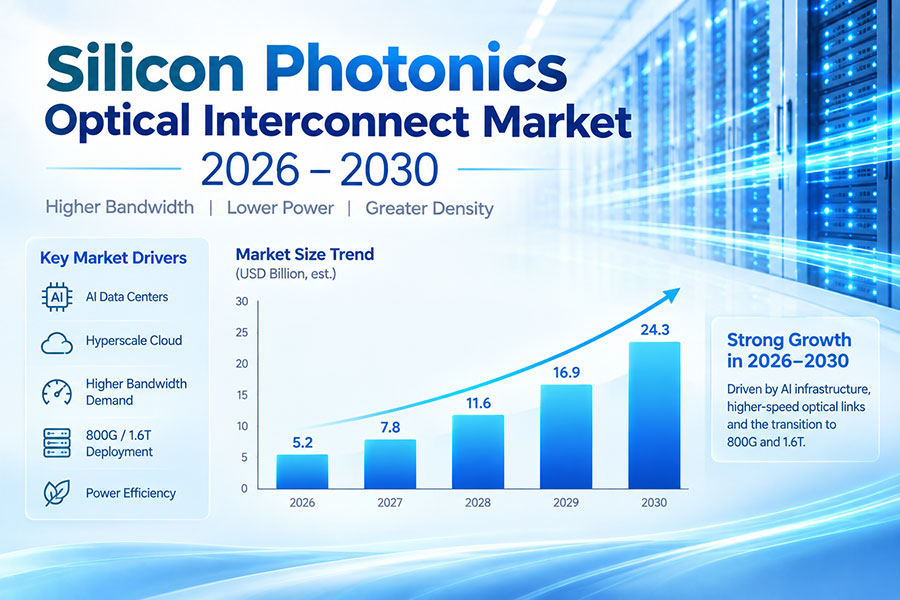
Silicon photonics can integrate optical functions with photonic integrated circuits and is increasingly relevant to high-speed optical connectivity. DSP technology can work alongside silicon photonics to manage electrical and optical signal processing.
AI networking is accelerating the transition toward higher optical speeds. The growth of 800G and 1.6T connectivity is increasing the demand for DSPs capable of supporting higher lane rates while maintaining power efficiency.
From 2026 to 2030, the market is expected to shift toward higher-speed PAM4 DSPs, lower-power architectures, 1.6T connectivity, and greater adoption of alternative architectures such as LPO and CPO.
In 2026, 800G remains a major driver of PAM4 DSP demand, while 1.6T optical connectivity is entering a stronger deployment and qualification phase. AI infrastructure investment is an important factor behind this growth.
During 2027 and 2028, 1.6T optical systems are expected to become increasingly important. DSP vendors will focus on higher lane rates, lower power consumption, improved integration, and compatibility with emerging optical architectures.
By 2029 and 2030, higher-speed optical systems and alternative architectures may reshape the DSP market. LPO, CPO, and other integrated optical solutions could reduce DSP requirements in some applications while creating new opportunities in others.
Major market drivers include AI data center expansion, increasing GPU cluster sizes, 800G and 1.6T deployment, higher switch bandwidth, cloud infrastructure investment, and growing demand for low-power optical connectivity.
Key challenges include power consumption, thermal management, semiconductor complexity, signal integrity, optical component performance, manufacturing cost, and compatibility with rapidly evolving networking standards.
Competition is increasingly focused on DSP performance, power efficiency, process technology, software support, optical integration, and the ability to support multiple generations of high-speed optical connectivity.
The optical DSP market will continue evolving alongside high-speed optical networking. 800G and 1.6T will remain important growth areas, while LPO, CPO, silicon photonics, and higher-speed signaling will influence the future role of DSP technology.
The optical DSP market is closely linked to the development of high-speed optical networks. AI data centers, 800G deployment, 1.6T connectivity, PAM4 signaling, and increasing bandwidth requirements are creating strong demand for efficient optical DSP solutions. At the same time, LPO and CPO are introducing new architectures that may change DSP requirements across different applications.
For any questions, please contact us by email or WhatsApp.
Email: sales@c-light.com
WhatsApp: +86 132 6656 7067