
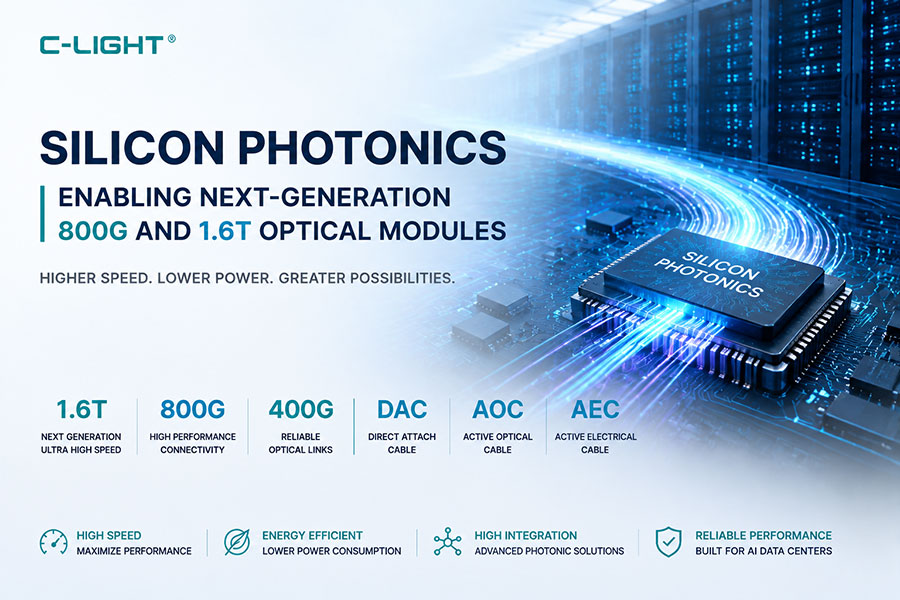
With the rapid growth of artificial intelligence (AI), high-performance computing, and large-scale data centers, traditional optical communication technologies are facing increasing challenges in bandwidth, power consumption, and scalability. Silicon photonics is emerging as a key technology for next-generation optical interconnect solutions, enabling higher-speed, lower-power, and more compact optical modules.
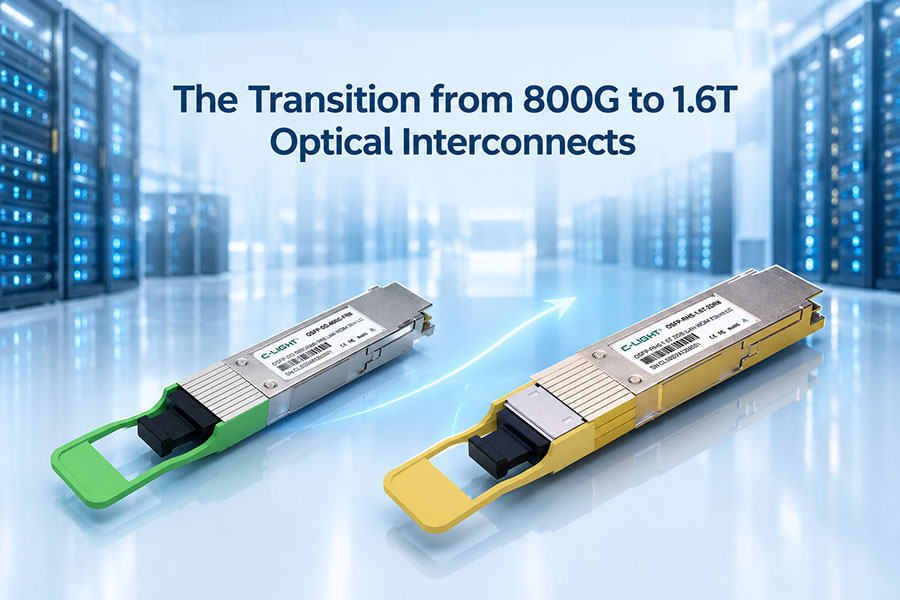
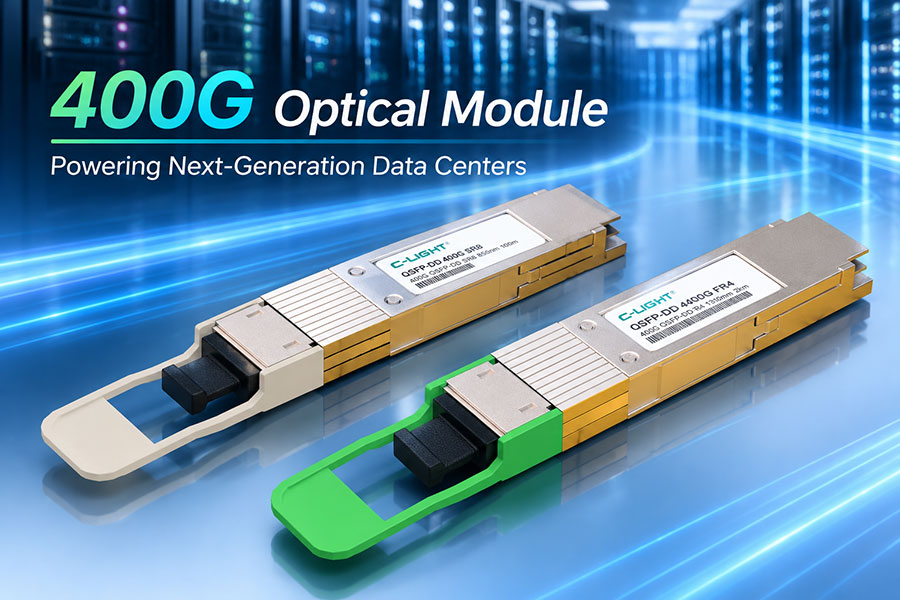
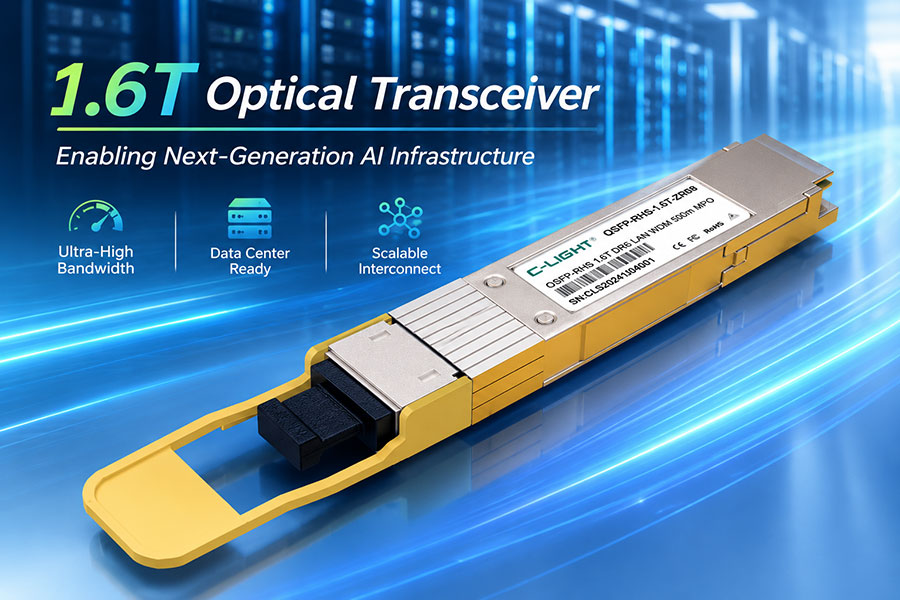
As data center networks evolve from 400G to 800G and 1.6T, silicon photonics technology is becoming an important foundation for future optical transceivers, supporting massive AI workloads, GPU clusters, and high-density network architectures.
Silicon photonics is an advanced optical technology that integrates optical components with silicon-based semiconductor platforms. By combining the advantages of silicon manufacturing processes and photonic devices, silicon photonics enables high-speed optical signal transmission with improved integration density and manufacturing efficiency.
Unlike traditional optical modules that rely on discrete optical components, silicon photonics integrates key optical functions such as lasers, modulators, waveguides, and photodetectors onto silicon photonic chips.
High-speed optical signal processing
Compact optical integration
Lower power consumption
Mass production capability using semiconductor processes
The rapid expansion of AI data centers requires extremely high bandwidth connectivity between GPUs, switches, and computing nodes. Traditional optical module architectures face limitations in power consumption, thermal management, and physical size.
Silicon photonics provides a new approach for developing 800G and 1.6T optical modules by improving optical integration and reducing the complexity of high-speed transmission systems.
Higher bandwidth: Supports next-generation 800G and 1.6T optical interconnect requirements.
Lower power consumption: Helps reduce energy usage in large-scale AI clusters.
Higher integration: Enables smaller optical engines and advanced packaging.
Better scalability: Supports future 3.2T and beyond optical communication development.
A silicon photonics-based optical module typically includes several key components working together to achieve high-speed optical transmission.
Silicon Photonic Chip: Responsible for optical signal modulation and processing.
Laser Source: Provides optical carriers for high-speed transmission.
Optical Coupling: Connects photonic chips with external optical fibers.
Electronic IC: Provides high-speed electrical signal processing.
For 800G and 1.6T optical modules, advanced packaging technologies are required to achieve higher lane speeds, improved thermal performance, and reliable operation in AI data center environments.
AI clusters require extremely high communication bandwidth between thousands of GPUs. Network bottlenecks can significantly impact AI training efficiency, making optical interconnect technologies increasingly important.
Silicon photonics enables high-density optical connectivity for AI data centers by supporting:
800G optical transceivers for current AI networking applications
1.6T optical modules for future high-performance AI clusters
Low-latency optical communication between switches and computing nodes
Energy-efficient data center network architectures
| Technology | Traditional Optical Modules | Silicon Photonics |
|---|---|---|
| Integration | Discrete optical components | Highly integrated photonic chips |
| Power Consumption | Higher power requirements | Lower power operation |
| Bandwidth Scaling | Limited by component complexity | Supports 800G, 1.6T and future speeds |
| Manufacturing | Complex optical assembly | Semiconductor-based manufacturing |
Silicon photonics is expected to play an important role in various high-speed communication applications, including:
AI Data Centers: High-bandwidth optical interconnect between GPU clusters and switches.
Cloud Computing: Scalable optical networking infrastructure.
High Performance Computing: Ultra-low latency communication systems.
Future CPO Systems: Co-packaged optics solutions integrating optical engines closer to switching chips.
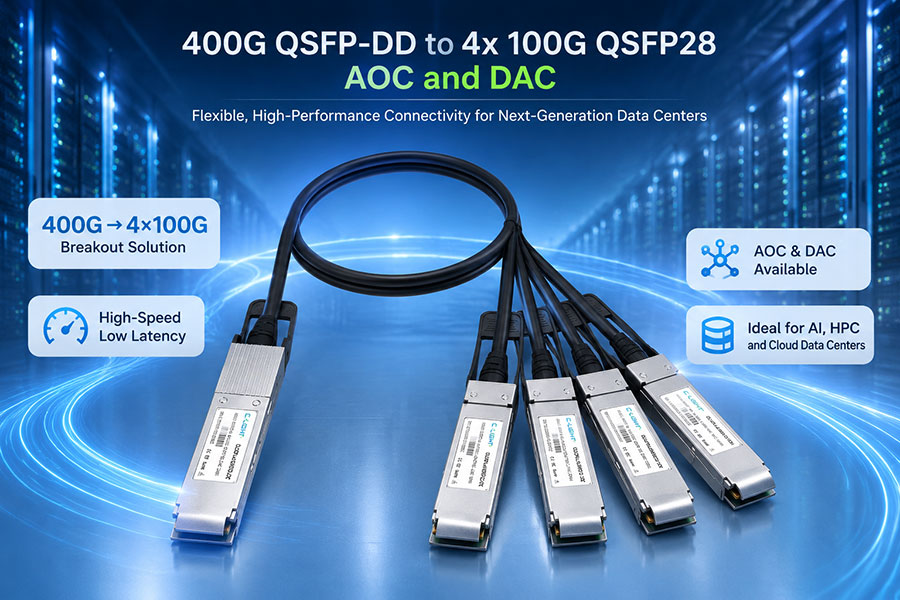
With the continuous evolution of AI infrastructure, C-LIGHT focuses on developing advanced optical connectivity solutions including 400G, 800G, and 1.6T optical modules, high-speed DAC, AOC, and AEC products.
By combining advanced optical technologies with next-generation data center requirements, C-LIGHT provides reliable solutions for AI clusters, cloud computing networks, and high-performance optical communication systems.
The demand for higher bandwidth and lower power consumption will continue to accelerate silicon photonics adoption. Future optical modules will move toward higher integration, higher transmission speeds, and closer integration with computing platforms.
800G optical modules are becoming a key technology for AI data centers, while 1.6T optical modules will support future large-scale AI networks. Silicon photonics will continue to be a critical technology driving the evolution of optical interconnect systems.
Answer: Silicon photonics is a technology that integrates optical components with silicon semiconductor platforms to achieve high-speed and low-power optical communication.
Answer: Silicon photonics improves integration density, reduces power consumption, and enables scalable optical solutions for next-generation high-speed networks.
Answer: Silicon photonics provides high-bandwidth optical connectivity required for GPU clusters, AI networks, and large-scale computing systems.
Answer: Silicon photonics technology can support current 800G optical modules and future 1.6T and beyond optical communication systems.
Answer: Related products include high-speed optical transceivers, 800G optical modules, 1.6T optical modules, DAC, AOC, AEC, and CPO optical solutions.
For any questions, please contact us by email or WhatsApp.
Email: sales@c-light.com
WhatsApp: +86 132 6656 7067