
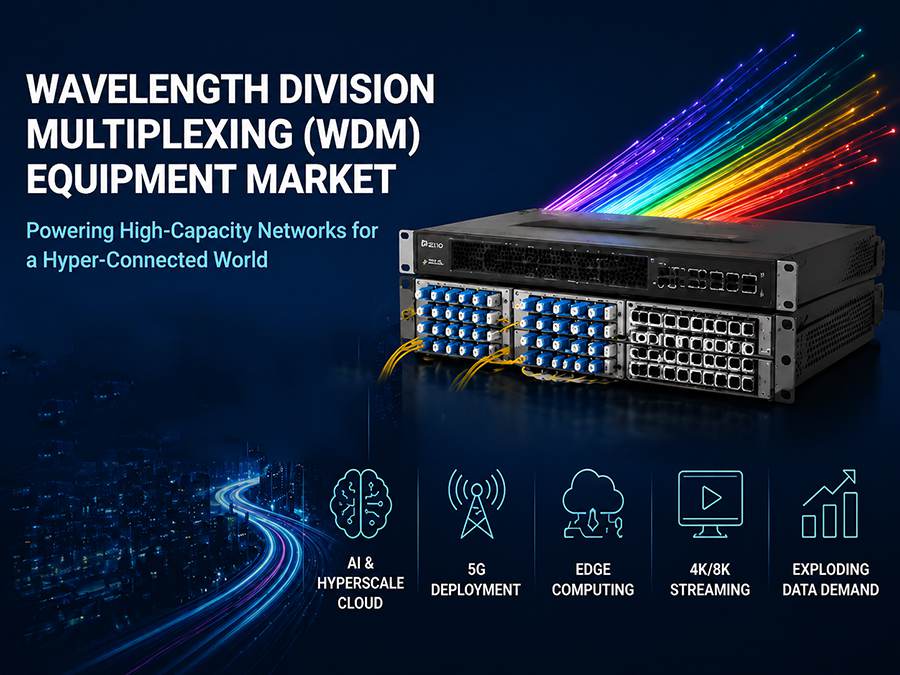
The global digital economy is driving an unprecedented surge in network traffic. The rapid growth of AI computing, hyperscale cloud infrastructure, 5G deployment, edge computing, and ultra-high-definition streaming services has significantly increased the demand for high-capacity optical communication systems.
Under this trend, Wavelength Division Multiplexing (WDM) technology has become one of the most important foundations of modern optical transmission networks. By allowing multiple optical wavelengths to be transmitted simultaneously over a single fiber, WDM technology dramatically improves bandwidth efficiency while reducing infrastructure costs.
Today, WDM equipment is widely deployed in:
AI data centers
Telecom backbone networks
Metro optical transport
Cloud data center interconnect (DCI)
Enterprise campus networks
5G fronthaul and backhaul systems
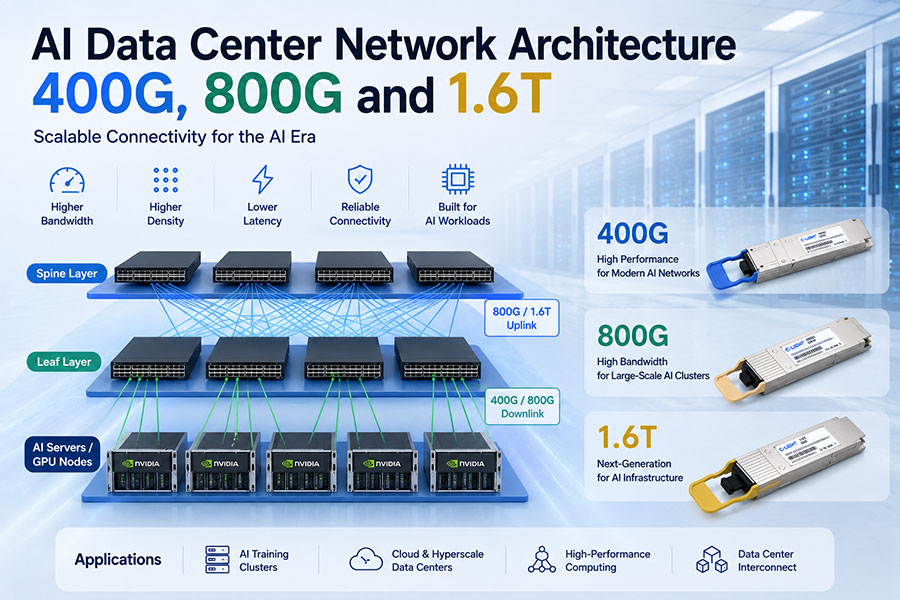
As the market transitions toward 400G, 800G, and future 1.6T networking, the demand for advanced DWDM and CWDM solutions continues to expand rapidly.
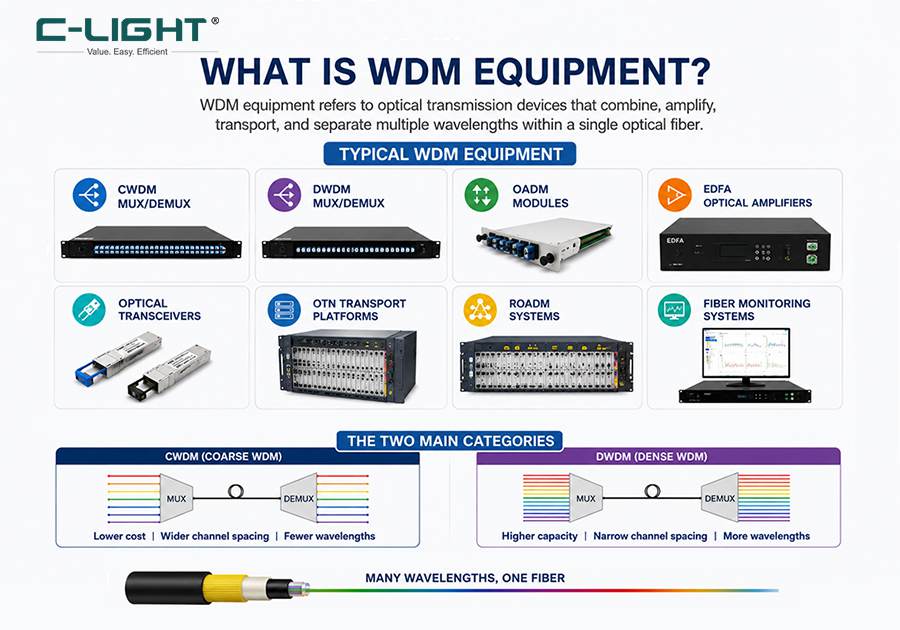
WDM equipment refers to optical transmission devices that combine, amplify, transport, and separate multiple wavelengths within a single optical fiber.
Typical WDM systems include:
EDFA optical amplifiers
Optical transceivers
ROADM systems
Fiber monitoring systems
The two main categories are CWDM and DWDM.
CWDM for Metro and Enterprise Networks
CWDM (Coarse Wavelength Division Multiplexing) is widely used in:
Enterprise interconnection
Campus networks
Access layer transmission
5G aggregation
Medium-distance metro transmission
CWDM solutions offer:
Lower deployment costs
Simplified architecture
Reduced power consumption
Flexible wavelength expansion
In recent years, compact passive CWDM systems have become increasingly popular for edge computing and enterprise optical networking.
C-LIGHT provides multiple CWDM solutions for metro and enterprise deployments, including:
CLCWMUX8CH-1U-LF
CLCWMUX18CHD-1U-LF
CLCWMUX18S-OTB-LF-REV2
PLC-based CWDM MUX DEMUX systems
1U rack-mounted passive optical platforms
These solutions support flexible wavelength allocation and simplified fiber utilization in dense network environments.
AI and Cloud Infrastructure Are Accelerating DWDM Deployment
DWDM (Dense Wavelength Division Multiplexing) technology supports higher channel density and significantly larger transmission capacity than CWDM systems.
As AI data centers and hyperscale cloud providers expand globally, DWDM has become critical for:
Data center interconnect (DCI)
Long-haul transmission
AI GPU cluster networking
High-performance computing (HPC)
Cloud backbone infrastructure
Modern AI training clusters generate massive east-west traffic between GPU nodes, requiring ultra-low-latency and ultra-high-bandwidth optical interconnects.
To support these environments, operators increasingly deploy:
400G coherent optics
800G optical transceivers
High-density DWDM line systems
Coherent DCI architectures
C-LIGHT has introduced multiple high-speed optical modules suitable for AI and hyperscale networking environments, including:
CL400GQDDDR4+
CL400GZR coherent transceivers
These products are designed for ultra-high-density data center fabrics and large-scale cloud networking applications.
AI Clusters Are Driving Next-Generation Optical Demand
The explosive growth of generative AI and large language models has dramatically increased demand for high-speed optical infrastructure.
Modern AI clusters require:
Extremely high throughput
Low latency communication
Scalable spine-leaf architectures
Efficient GPU-to-GPU connectivity
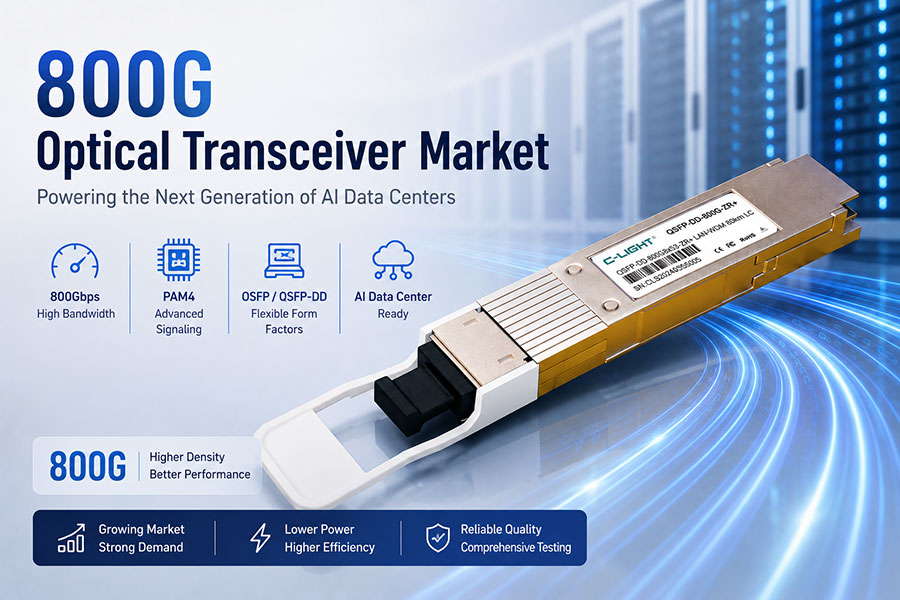
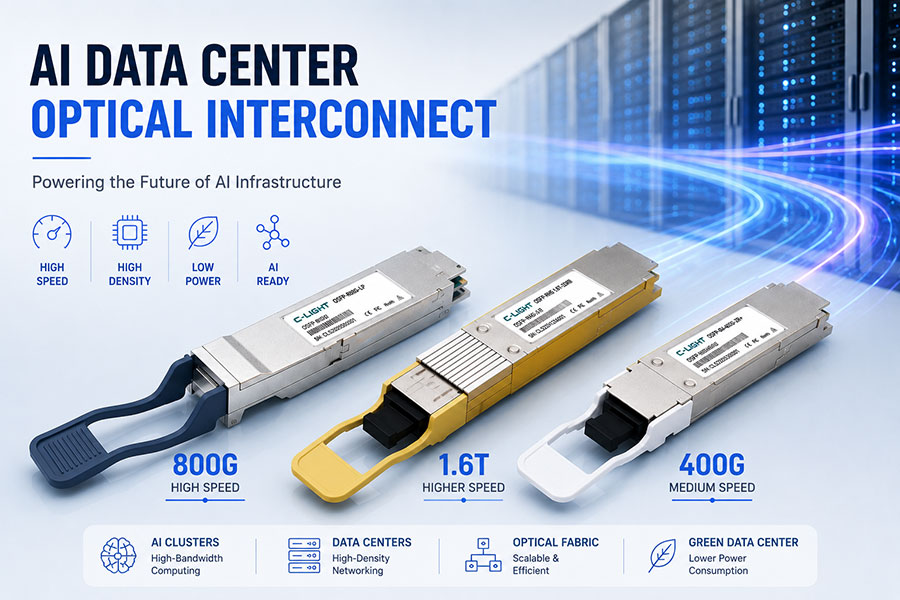
As a result, 400G and 800G optical modules are rapidly becoming mainstream.
Popular deployment architectures include:
400G DR4
400G FR4
800G SR8
800G DR8
800G 2×FR4
400ZR coherent transmission
C-LIGHT’s optical transceiver portfolio includes:
CL200GQDDSR4
CL400GQDDDR4
CL400GQDDSR8
CL800GOSFPSR8
CL800GQDDDR8
These modules support hyperscale switching platforms, AI Ethernet fabrics, InfiniBand networking, and high-capacity DCI systems.
Mobile Networks Require Higher Fiber Efficiency
The evolution from 4G to 5G has significantly increased bandwidth requirements in mobile transport networks.
Telecom operators are increasingly using CWDM and DWDM solutions to:
Reduce fiber leasing costs
Increase transmission capacity
Simplify network expansion
Improve wavelength scalability
Passive optical transmission devices are now widely deployed in:
Mobile fronthaul
Midhaul aggregation
Edge computing infrastructure
Telecom metro networks
C-LIGHT provides passive optical transmission products such as:
4CH/8CH/16CH CWDM MUX DEMUX
DWDM LGX modules
OADM optical add-drop multiplexers
Fiber patch systems
Rack-mounted optical distribution platforms
These solutions are suitable for carrier-grade optical transport networks and 5G aggregation deployments.
Hyperscale Cloud Providers Need Massive Optical Capacity
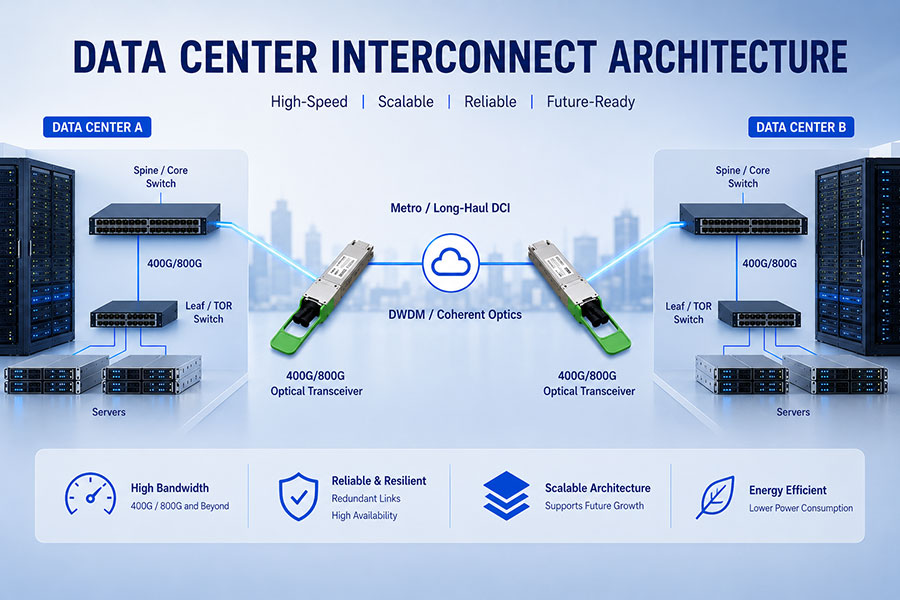
The rapid expansion of cloud services has accelerated demand for DCI infrastructure connecting:
Hyperscale campuses
Regional data centers
Cloud availability zones
Edge computing facilities
Modern DCI systems require:
High spectral efficiency
Long-distance coherent transmission
Low power consumption
Scalable optical architectures
As a result, coherent optics and open optical networking are becoming mainstream.
Products such as:
400ZR
400ZR+
QSFP-DD coherent modules
OSFP coherent optics
Open line systems
are reshaping the optical networking ecosystem.
C-LIGHT’s coherent and high-speed optical solutions support modern DCI architectures requiring:
Long-haul transmission
AI Ethernet networking
Cloud-scale optical fabrics
High-density switching environments
The Industry Is Moving Toward Energy-Efficient Optical Networking
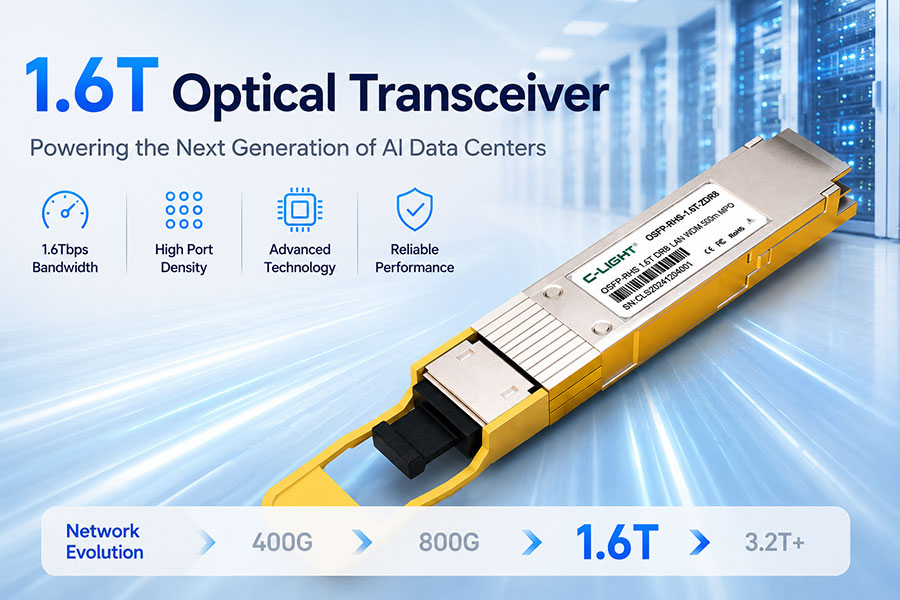
As optical transmission speeds move toward 800G and future 1.6T architectures, thermal management becomes increasingly important.
Hyperscale data centers are now prioritizing:
Low-power optical modules
Improved thermal efficiency
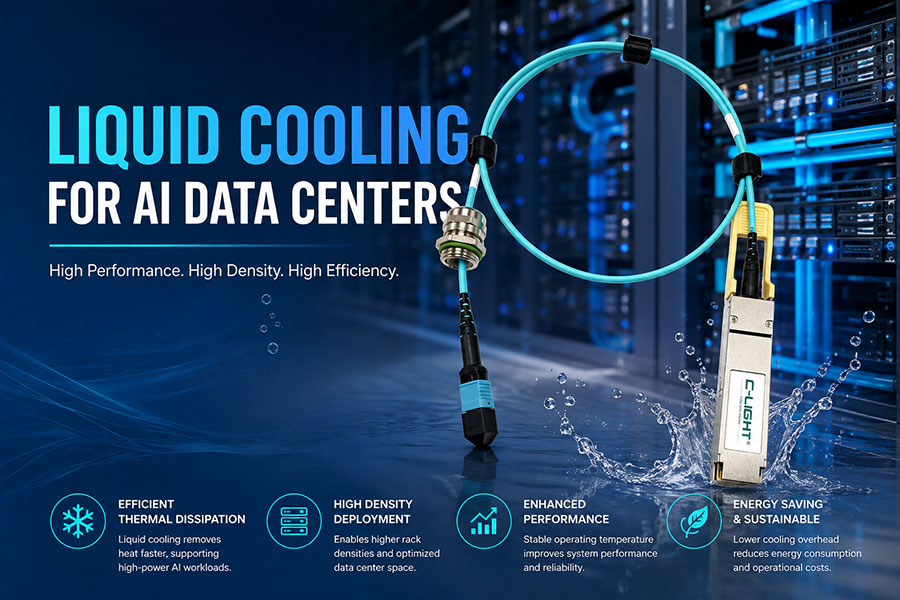
Liquid cooling compatibility
Sustainable networking infrastructure
To address these requirements, immersion cooling technology is gaining attention across the optical communications industry.
C-LIGHT has introduced Liquid Immersion Transceiver solutions designed for:
AI GPU clusters
High-density data center fabrics
Immersion cooling environments
Next-generation green data centers
These solutions help reduce cooling costs while improving overall network efficiency.
Multi-Vendor Interoperability Is Becoming a Priority
Operators increasingly prefer:
Open optical line systems
Disaggregated networking
Flexible optical architectures
Vendor-neutral interoperability
This trend is accelerating innovation in:
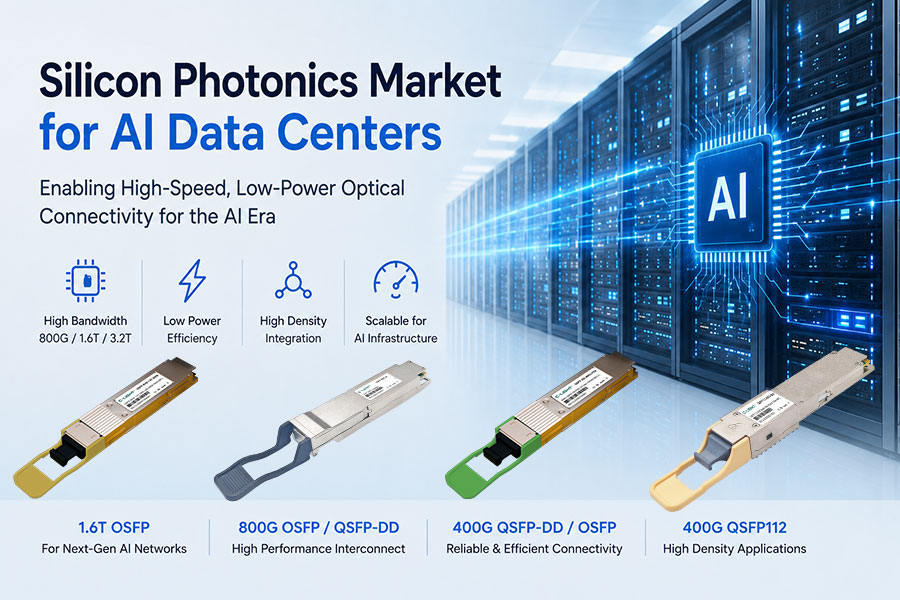
Silicon photonics
Coherent DSP technology
Optical software automation
Intelligent wavelength management
WDM equipment vendors are now focusing on:
Higher integration density
Lower power consumption
AI-assisted network optimization
Automated optical monitoring
The future WDM market will be shaped by several key technologies:
1. 800G and 1.6T Optical Networking
AI infrastructure will continue driving demand for ultra-high-speed optics.
2. Silicon Photonics
Integrated photonic chips will reduce power consumption and improve scalability.
3. Co-Packaged Optics (CPO)
CPO architectures will shorten electrical trace distances and improve switch efficiency.
4. AI-Driven Optical Management
Future optical networks will increasingly use AI for:
Fault prediction
Traffic optimization
Dynamic wavelength allocation
Automated network recovery
The global WDM equipment market is entering a transformative period driven by AI computing, cloud expansion, 5G deployment, and hyperscale data center growth.
From passive CWDM systems to coherent 800G optical transmission, WDM technology has become the backbone of modern digital infrastructure.
As network bandwidth requirements continue to grow, the industry will increasingly demand:
Higher transmission density
Lower latency
Reduced power consumption
Intelligent optical automation
Scalable DCI architectures
C-LIGHT continues expanding its portfolio across passive WDM systems, high-speed optical transceivers, coherent optics, and AI data center interconnect solutions, helping operators and enterprises build future-ready optical networks for the AI era.
For any questions, please contact us by email or WhatsApp.
Email: sales@c-light.com
WhatsApp: +86 132 6656 7067