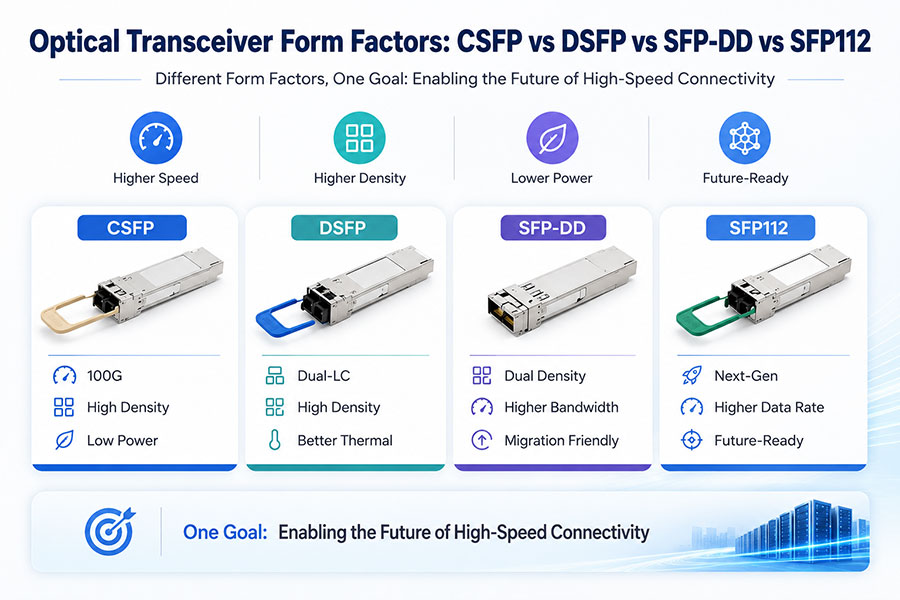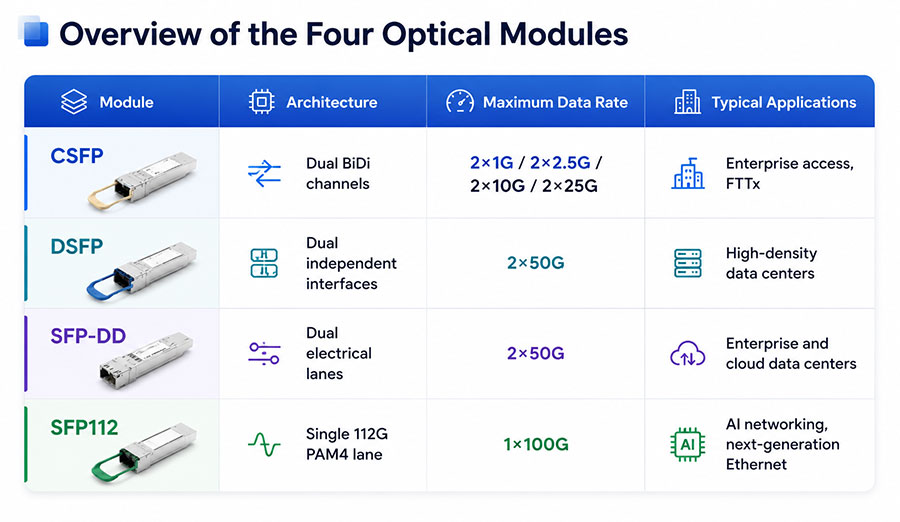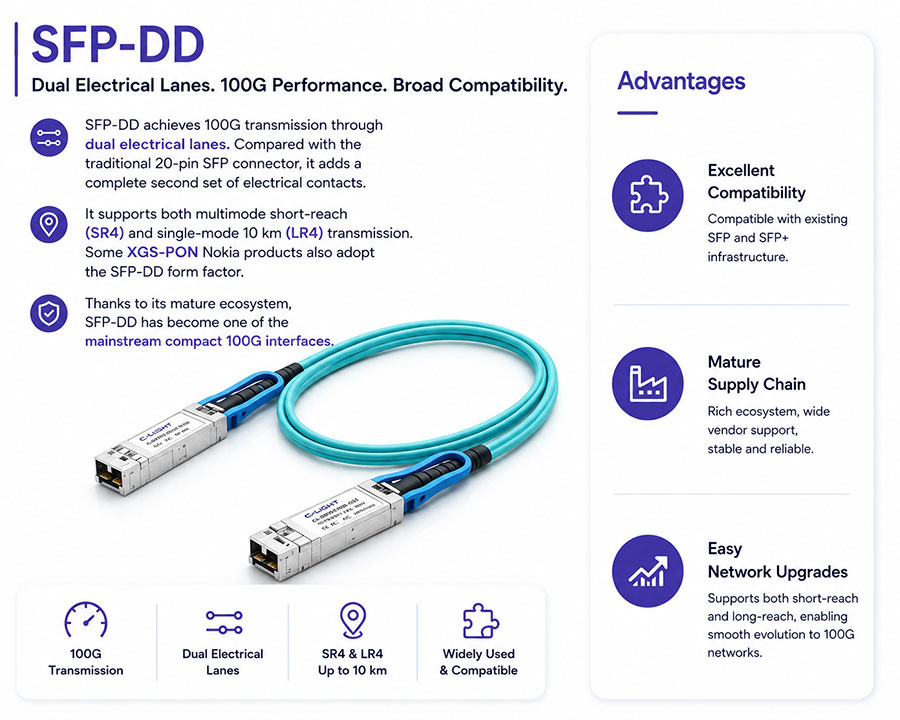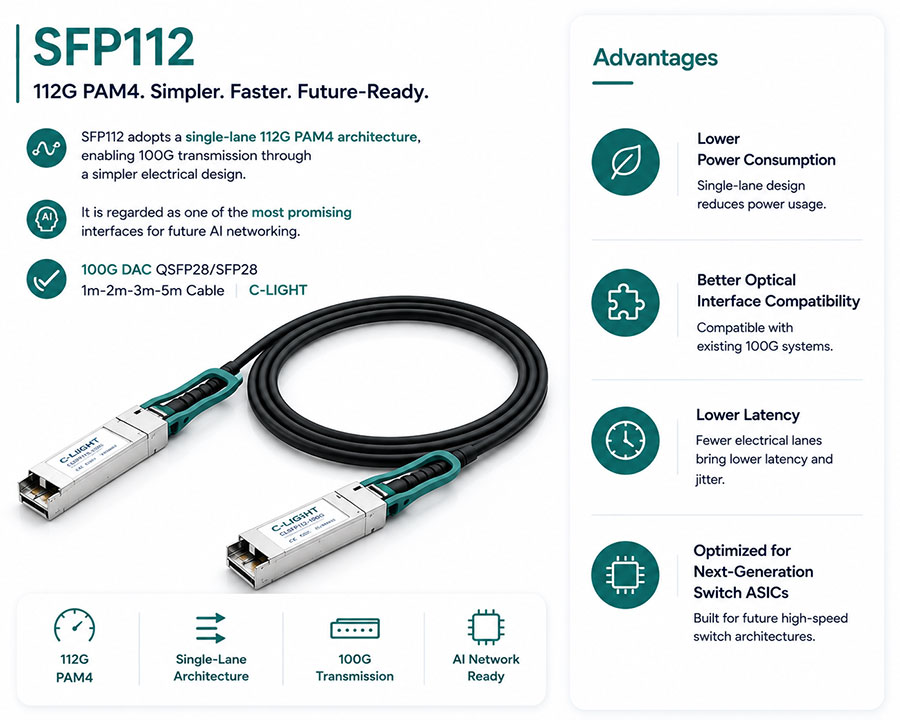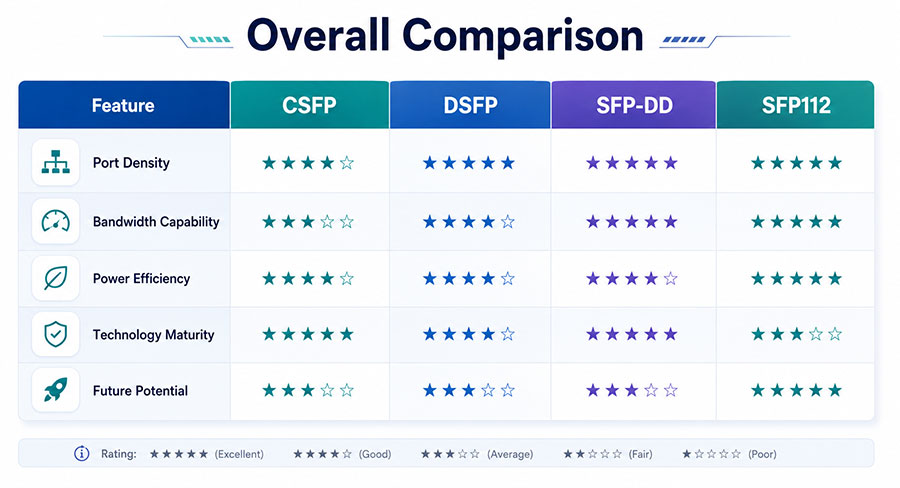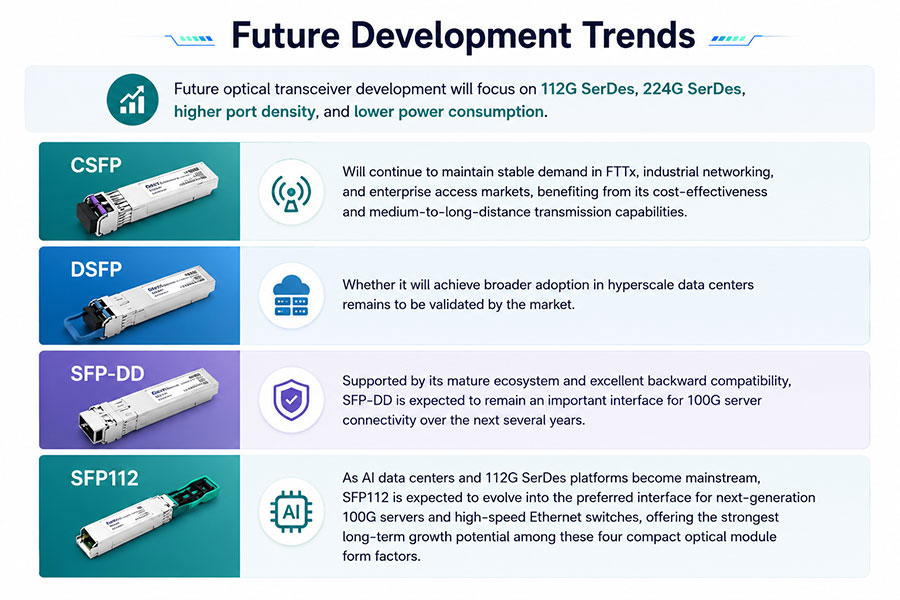

Answer: CSFP, DSFP, SFP-DD, and SFP112 are compact optical module form factors designed for different network requirements. CSFP focuses on improving port density by integrating two optical channels into an SFP-sized module. DSFP supports higher-density short-reach connections for next-generation data centers. SFP-DD uses dual electrical lanes to support 100G connectivity with strong ecosystem compatibility, while SFP112 adopts a single-lane 112G PAM4 architecture for future high-speed networking applications.
Answer: Compact optical form factors help network operators increase port density, reduce equipment footprint, and improve power efficiency. As networks evolve toward 100G, 200G, and AI-driven workloads, smaller and more efficient optical interfaces become increasingly important for data centers, cloud networks, and high-density access applications.
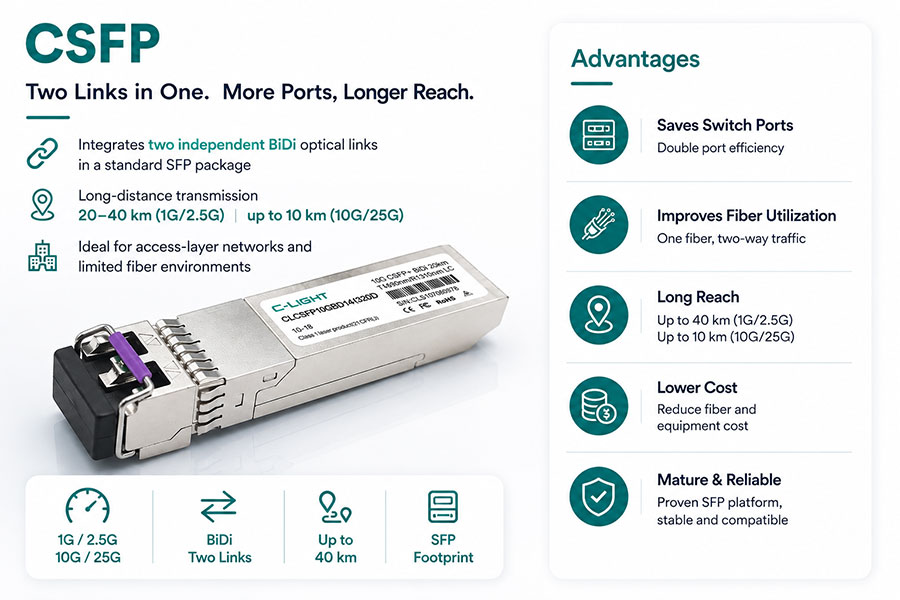
Answer: CSFP (Compact Small Form-Factor Pluggable) optical transceivers improve fiber and port utilization by integrating two independent optical channels into a single SFP-sized package. They are widely used in FTTx, access networks, enterprise networks, and scenarios where operators need higher connection density without increasing equipment size.
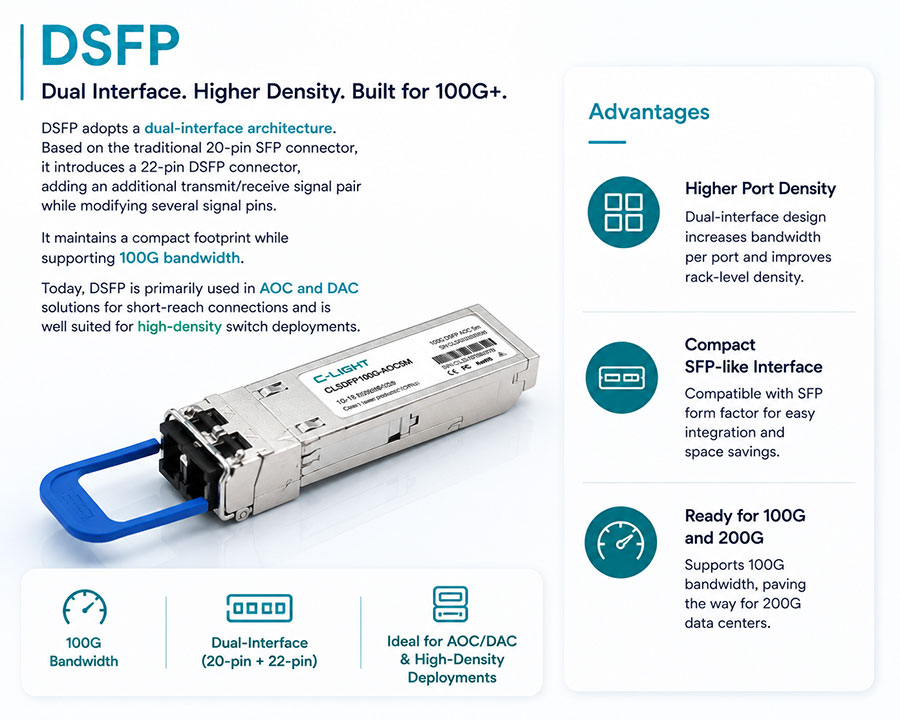
Answer: DSFP and SFP-DD are both designed for compact high-speed networking, but they target different applications. DSFP focuses on high-density short-distance connections such as DAC and AOC applications in data centers. SFP-DD uses a dual-lane electrical interface to support 100G transmission and provides stronger ecosystem maturity and compatibility for enterprise and cloud networking environments.
Answer: SFP112 uses a single 112G PAM4 electrical lane to achieve 100G transmission with a simpler architecture. Compared with multi-lane solutions, SFP112 can provide lower power consumption, reduced electrical complexity, and improved compatibility with next-generation switch ASICs, making it suitable for future AI networking and high-speed Ethernet applications.
Answer: The choice depends on application requirements. CSFP is suitable for access networks requiring higher port density and fiber efficiency. DSFP is designed for compact short-reach data center connections. SFP-DD is a practical choice for 100G deployments requiring ecosystem compatibility, while SFP112 is better suited for next-generation AI networks and high-speed Ethernet platforms requiring lower power and higher efficiency.
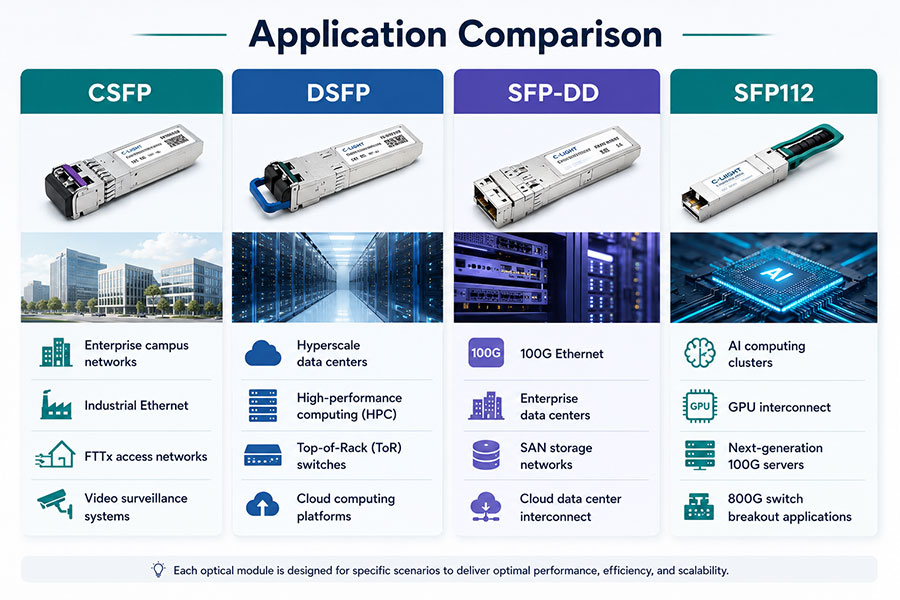
Answer: CSFP is commonly used in FTTx, enterprise access, and industrial networking. DSFP is mainly applied in high-density data centers, HPC systems, and ToR switch connections. SFP-DD is used for 100G Ethernet, enterprise data centers, and cloud interconnects. SFP112 targets AI clusters, GPU networking, next-generation servers, and high-speed switch platforms.
Answer: SFP112 is expected to become an important interface for future high-speed networking, but it will not completely replace CSFP, DSFP, or SFP-DD. Different form factors will continue to coexist because they address different market needs. CSFP remains valuable for access networks, SFP-DD benefits from ecosystem maturity, DSFP serves compact high-density connections, and SFP112 supports future AI and 100G+ networking evolution.
For any questions, please contact us by email or WhatsApp.
Email: sales@c-light.com
WhatsApp: +86 132 6656 7067