
What is a CWDM Demux?
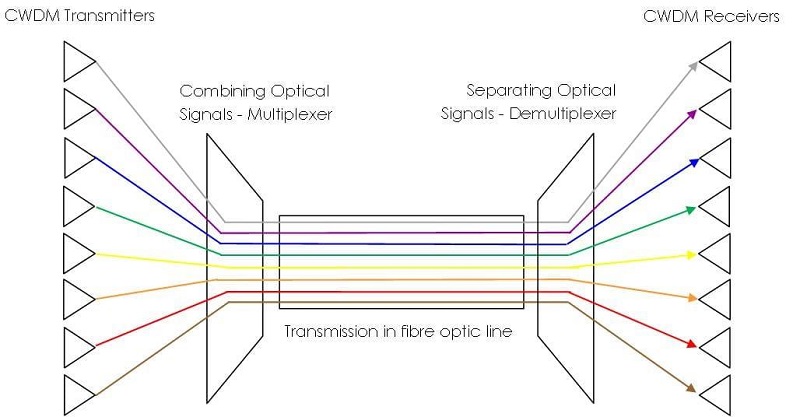
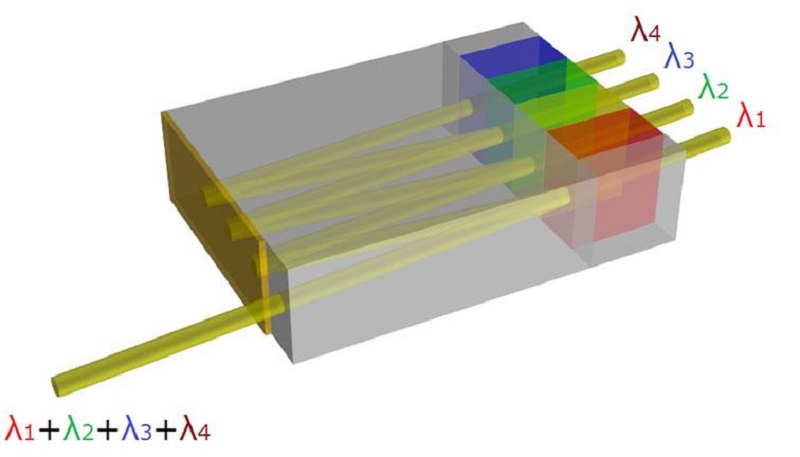
A CWDM Demux (Coarse Wavelength Division Multiplexer Demultiplexer) is a passive optical device that separates multiple wavelengths transmitted over a single fiber into individual channels.
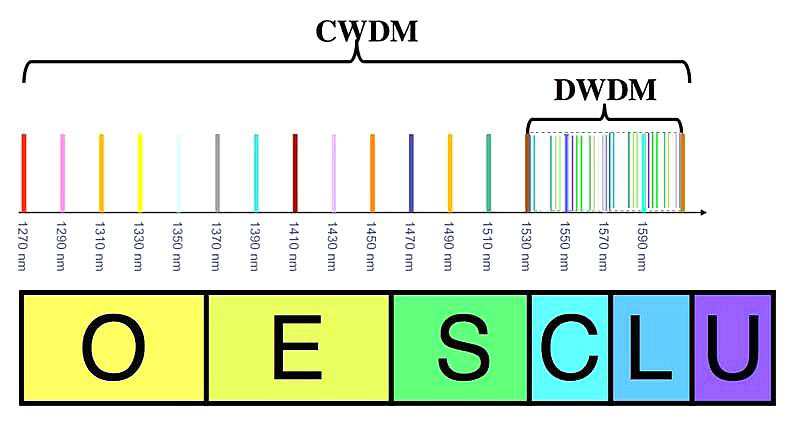
Multiple optical signals (1270–1610 nm) are multiplexed onto one fiber
Signals travel simultaneously over the same infrastructure
The CWDM Demux splits them back into separate outputs at the receiving end.
When selecting a CWDM Demux, these parameters directly impact network performance:
Indicates signal attenuation through the device
Lower is better
Typical range: 1.5 dB – 5.0 dB
Prevents interference between wavelengths
Standard values:
Adjacent channels ≥30 dB
Non-adjacent channels ≥40 dB
Measures consistency across channels
Lower variation ensures stable transmission
Typically ≤0.1–0.3 dB
Affects signal integrity in high-speed networks
Commercial: -5°C to 65°C
Industrial: -40°C to 85°C
To better understand performance differences, here’s a direct comparison:
Why Lower Insertion Loss Matters
Lower insertion loss directly translates to:
Longer transmission distance
Reduced need for high-power transceivers
Lower overall network cost (TCO)
In large-scale deployments like data centers, even a 1 dB improvement can significantly reduce power consumption and equipment requirements.
Applications of CWDM Demux
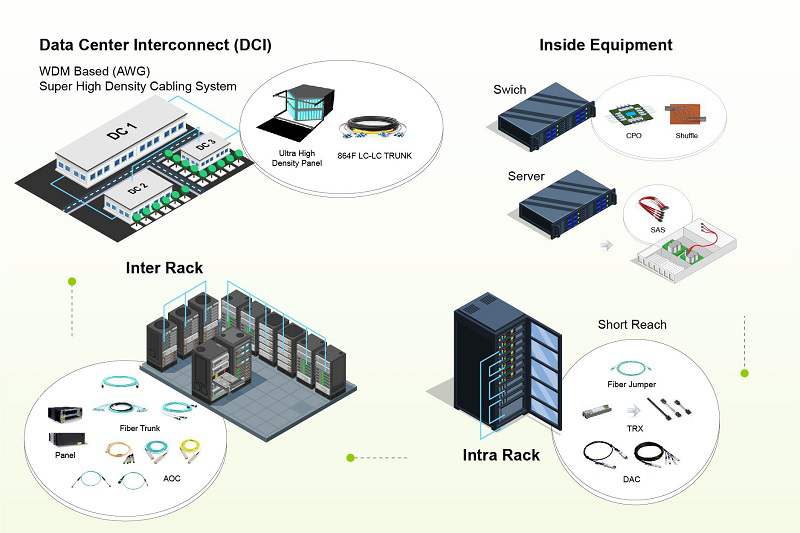
CWDM Demux is widely used in:
Data Center Interconnect (DCI)
Metro Area Networks (MAN)
5G Fronthaul Networks
Enterprise Campus Networks
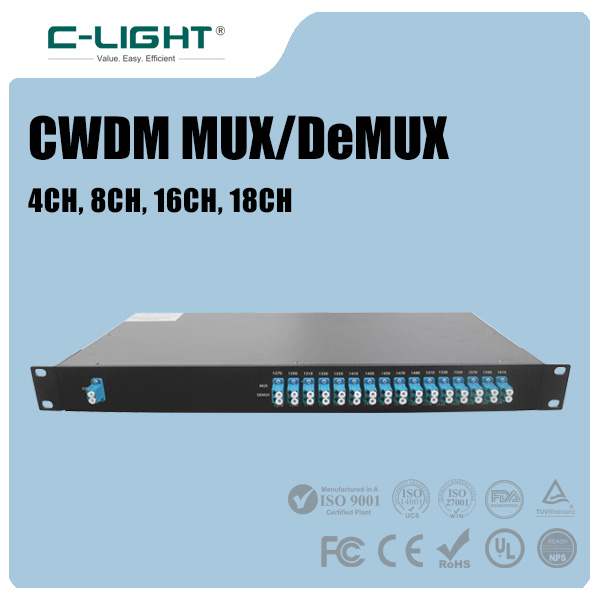
C-LIGHT delivers a balanced combination of performance, reliability, and cost-efficiency:
Ultra-low insertion loss
High channel isolation
Excellent channel consistency
LGX modules
Rack-mounted (1U/2U)
Compact ABS box
Works with major vendor equipment
Plug-and-play deployment
Wide temperature range
Long-term stable operation
CWDM Demux is a critical component for optimizing fiber infrastructure and reducing network costs. While many options exist, not all CWDM devices are created equal.
For any questions, please contact us by email or WhatsApp.
Email: sales@c-light.com
WhatsApp: +86 132 6656 7067