
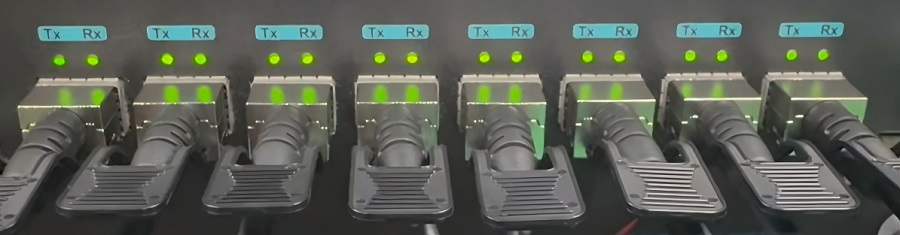
In data center and campus network deployments, 10 Gigabit Ethernet has become the mainstream standard for server access and switch interconnections. Faced with dense, short-distance connection requirements within a single rack or between adjacent racks, SFP+ DAC (Direct Attach Copper) high-speed cables are gradually replacing traditional "optical transceiver plus fiber" solutions due to their unique advantages of low cost, low power consumption, and low latency. However, many network engineers evaluating third-party compatible DAC cables inevitably confront a central concern: Can it truly and stably remain compatible with my Aruba switches?
This article focuses on the C-LIGHT 10G SFP+ DAC high-speed copper cable compatible with Aruba J9281D, providing a comprehensive analysis—from technical principles and hardware matching to coding adaptation and practical validation—of the logic behind its compatibility and the assurances C-LIGHT provides.
Aruba J9281D is an official 10G SFP+ to SFP+ DAC cable offered by HPE Aruba Networking. It measures 1 meter in length and features a passive copper twin-axial design.
The J9281D is widely used for stacking connections between Aruba switches, short-distance interconnectivity between switches and servers, and Top-of-Rack (ToR) to server connections. Its passive design means no additional power supply is required; power consumption is minimal, installation is true plug-and-play, and hot-swapping is supported.
Notably, the J9281D is backward compatible with the earlier version J9281B (B version). The specifications are nearly identical, with the primary distinction being the software version identifier. This means that if your network contains both B and D versions of Aruba cables, the J9281D can seamlessly replace the J9281B.
Whether a third-party DAC cable can successfully replace an OEM product hinges on matching across three critical layers.
2.1 Adherence to Standard Protocols
The physical interface and electrical characteristics of DAC cables must strictly comply with industry standards. The communication protocol of the C-LIGHT 10G SFP+ DAC conforms to IEEE 802.3ae. The interface protocols adhere to SFF-8431, SFF-8432, and SFF-8472. The packaging protocol is fully compliant with the SFP+ MSA (Multi-Source Agreement). The MSA standard defines the mechanical dimensions, pin assignments, and electrical interface specifications for SFP+ modules. Any DAC cable manufactured strictly in accordance with the MSA standard can be physically inserted into any standard SFP+ port. Therefore, from a standards compliance perspective, both the C-LIGHT CLC10GSFP-1M DAC and the Aruba J9281D are governed by unified industry specifications.
2.2 Electrical Matching at the Hardware Level
The Aruba J9281D employs a passive copper cable design, meaning there is no signal amplification chip inside the cable; it relies entirely on the switch port's drive capability for signal transmission. The C-LIGHT CLC10GSFP-1M DAC also utilizes a passive twin-axial copper structure with power consumption under 0.3W, fully consistent with the J9281D design.
It is crucial to note that if the network environment requires an Active DAC—which incorporates a signal amplification chip for longer transmission distances—a third-party passive DAC will not be a direct substitute. In such scenarios, Aruba officially recommends using 10G SR optical transceivers paired with fiber optic cables as an alternative solution.
2.3 Coding Adaptation: The Soul of Compatibility
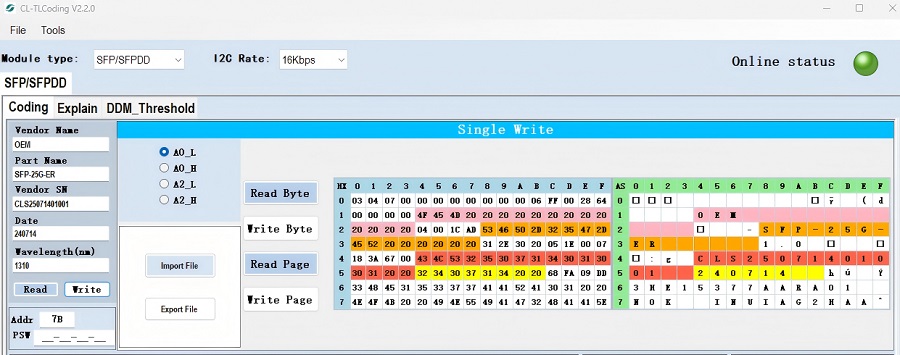
This is the most critical yet most frequently overlooked aspect of compatibility discussions. When a DAC cable is inserted into a switch port, the switch's main control chip reads the identity information and capability parameters stored in the cable's internal EEPROM via the I²C bus. This includes vendor name, model number, serial number, compliance code, cable length, and AWG value. If this coded information does not match the format expected by the switch, the port may refuse to operate or may generate "unsupported transceiver" alerts in the system log.
C-LIGHT possesses a proprietary in-house developed Coding Box, capable of precisely programming the EEPROM region of various optical modules and DAC cables (including SFP+/SFP28/QSFP/QSFP-DD/OSFP). This ensures the output identity information and capability parameters are perfectly aligned with the target compatible device. This capability guarantees that the C-LIGHT CLC10GSFP-1M DAC can be used compatibly across a wide range of switch types.
3.1 Full-Link Quality Control
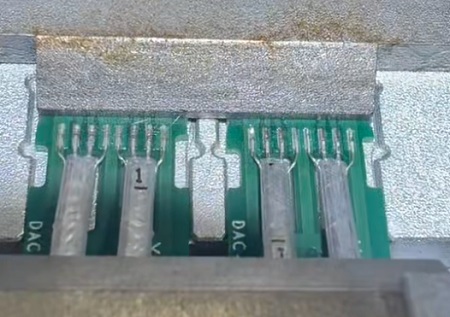
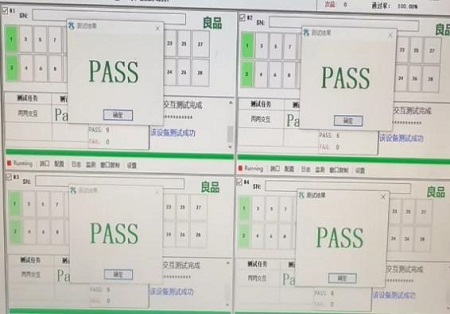
C-LIGHT was established within the optical communications industry and possesses 15 years of industry experience. Its 10G DAC high-speed cables are compatible with switches from over 100 brands. On the production side, C-LIGHT implements a three-stage quality control process: initial testing, final testing, and pre-shipment inspection, ensuring 100% testing of every cable before delivery.
 |  |
3.2 Technical Parameter Benchmarking Against Aruba J9281D
Based on specification parameters, the C-LIGHT 10G SFP+ DAC achieves comprehensive alignment with the Aruba J9281D:
| Item | C-LIGHT Specification | J9281D Specification |
| Model | CLC10GSFP-1M | J9281D |
| Cable Type | High-bandwidth passive twin-axial copper cable | Passive twin-axial copper cable |
| Data Rate | 10 Gbps | 10 Gbps |
| Length | 0.5m, 1m, 2m, 3m, 5m, 7m, 10m | 1m |
| Connector | SFP+ to SFP+ | SFP+ to SFP+ |
| Operating Temperature | -20°C ~ 80°C | 0°C ~ 70°C |
| AWG | 1-3m: 30AWG 5m and above: 24AWG | 30 AWG |
| Compliance Standards | IEEE 802.3ae, SFF-8431, SFF-8432 | IEEE 802.3ae, SFF-8431, SFF-8432 |
3.3 Warranty and After-Sales Service
C-LIGHT provides a 3-year warranty and long-term repair services for DAC cables. Furthermore, it commits that installing third-party modules will not affect the original manufacturer's warranty service for network equipment. This point is particularly crucial for many enterprise users, allowing them to enjoy cost savings without concern that equipment vendors might deny after-sales support citing "use of third-party accessories."
4.1 Aruba Device Compatibility List
The J9281D boasts a broad compatibility range within the Aruba ecosystem. According to information from the Aruba official community, the 3810M switch supports a series of DAC cables including J9281D, J9281B, J9283B, J9283D, J9285B, and J9285D. These cables can be used with the SFP+ ports on switch models such as JL071A, JL072A, JL073A, JL074A, and JL076A, particularly when these switches are equipped with the JL083A MACsec module.
Additionally, the J9281D is officially certified as the 10G DAC solution for the Aruba Instant On 1930 series (JL683A, JL682A, JL684A, JL685A) switches. The Aruba 8320/8400 series switches also support the J9281D. In the installation manual for the Aruba 6300F switch series, both J9281D and J9283D are listed among the officially supported cables.
|
|
4.2 Real-World Performance of Third-Party Compatible DACs
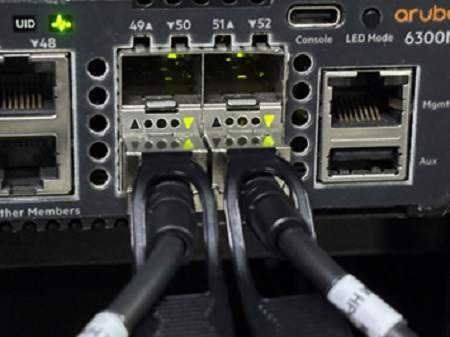
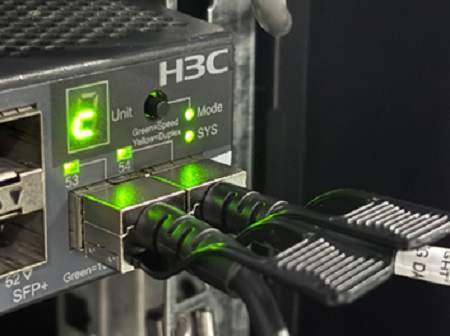
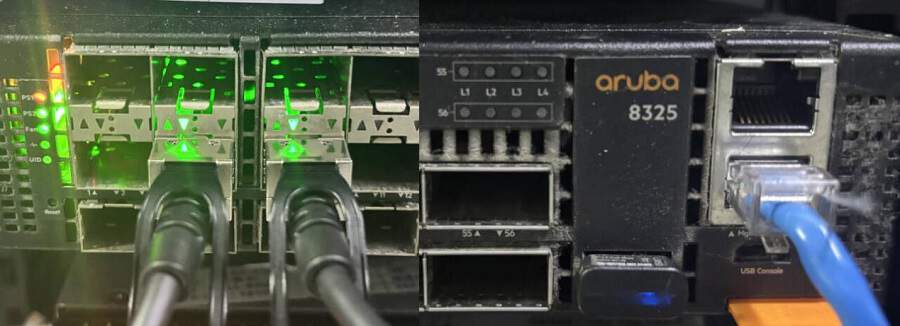
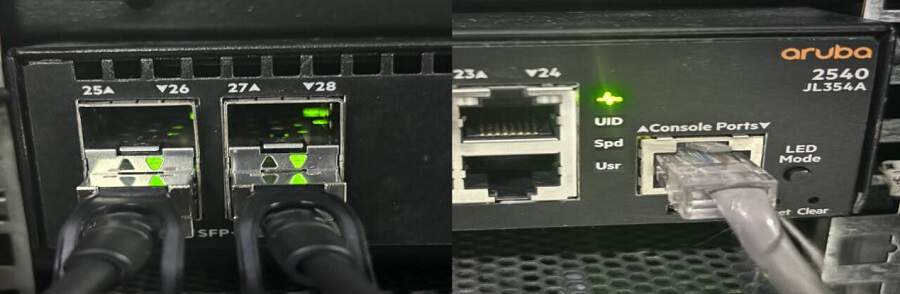
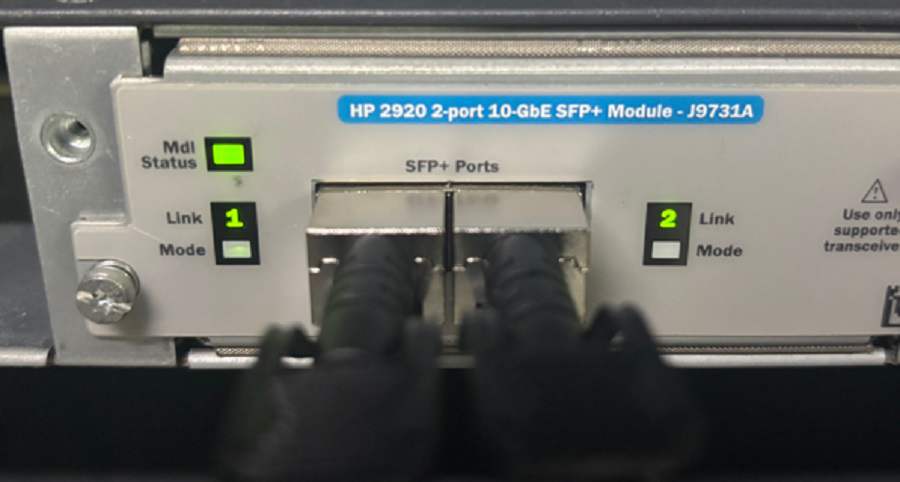
The actual performance of the CLC10GSFP-1M compatible DAC in Aruba environments has been positively validated extensively. It has been explicitly verified for use with the full range of Aruba 1930, 2540, 2920, 6300M, and 8325 switches. Other industry compatible DAC cables have similarly undergone 100% OEM application scenario compliance certification, with pre-programmed application-specific codes to meet router and switch vendor requirements.
These cases collectively demonstrate that compatible DAC cables from professional manufacturers, provided they feature correct coding and meet process standards, can deliver performance in Aruba environments entirely comparable to OEM products.
5.1 Key Considerations for Choosing Compatible DACs
When purchasing C-LIGHT DAC cables compatible with Aruba J9281D, consider the following points:
Verify Cable Type: Always select a Passive DAC. Aruba switches typically support only passive DACs; active DACs will not function properly if inserted.
Confirm Coding Match: Confirm with the supplier that the DAC cable's EEPROM has been correctly coded for Aruba/HPE devices. This is the prerequisite for true plug-and-play functionality.
Select Appropriate Length: The transmission distance for DAC copper cables is typically within 7 meters to guarantee error-free 10G transmission. C-LIGHT offers various lengths from 1m to 10m. Choose the specification most suitable for your actual rack layout to avoid excessive slack complicating cable management.
Check AWG Specification: Longer lengths require thicker wire gauges to maintain signal integrity. C-LIGHT uses 30 AWG for 1-3m cables and 24 AWG for 4m and longer cables, reflecting sound engineering design.
5.2 Usage Precautions
Minimum Bend Radius: The bend radius for DAC copper cables is typically around four times the cable diameter (approximately 1 inch). Excessive bending may damage internal conductors and impact signal transmission quality.
Insertion/Removal Procedures: DAC cables support hot-swapping, but it is advisable to ensure the port is not under heavy data traffic before plugging or unplugging to avoid transient errors.
Version Compatibility: Per Aruba official guidance, if a switch supports A/B/C versions of a module, the D/E versions are also supported; however, not all older versions can be reused on new equipment. Referencing the official compatibility matrix is recommended.
Avoid Strong EMI Environments: Although DAC copper cables possess a degree of EMI immunity, routing them parallel to high-voltage power cables over long distances should still be avoided.
Compatibility is never an empty promise; it is the result of the interplay between standards compliance, hardware design, coding technology, and quality control. The C-LIGHT 10G SFP+ DAC high-speed copper cable provides a complete technical solution for compatibility with Aruba J9281D by strictly adhering to MSA standards, employing a passive design that matches Aruba device requirements, and leveraging a proprietary coding box for precise EEPROM adaptation.
For scenarios such as data centers, enterprise server rooms, and campus networks requiring numerous short-distance 10G connections, choosing a proven third-party compatible DAC cable not only significantly reduces procurement costs but also offers more flexible length options and reliable after-sales service, all while ensuring performance and stability. After a rational assessment of compatibility factors, a compatible DAC cable is unequivocally a wise choice that balances cost-effectiveness with reliability.
For any questions, please contact us by email or WhatsApp.
Email: sales@c-light.com
WhatsApp: +86 132 6656 7067