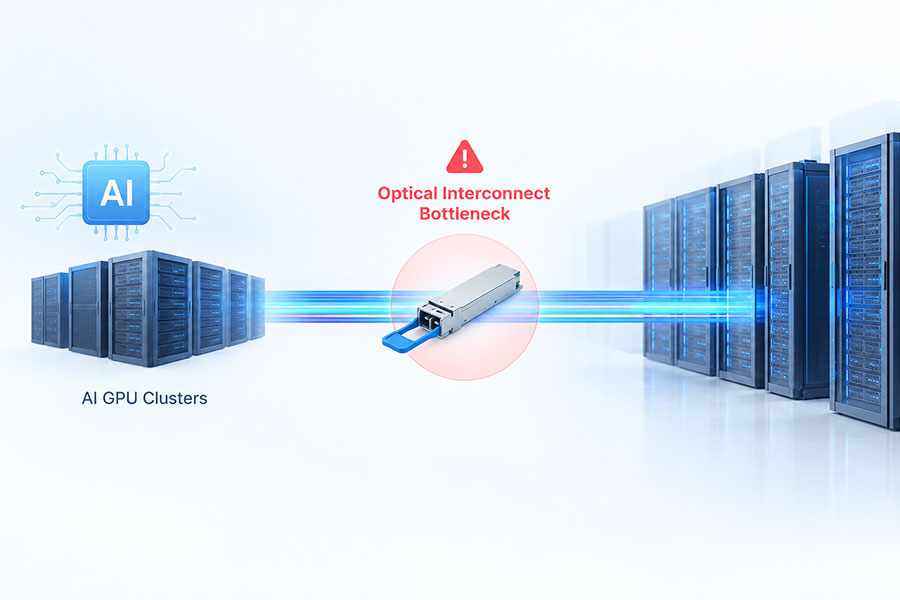
As AI accelerators increase computing density and power consumption, liquid immersion cooling offers an alternative approach to managing heat, improving thermal conditions, and supporting high-density computing infrastructure.
Artificial intelligence workloads are driving substantial growth in data center computing capacity. GPU clusters, high-performance computing systems, and large-scale AI training environments concentrate high-power processors, memory, and networking components within limited physical space. These components generate significant heat that must be removed continuously to maintain stable operation.
Traditional air cooling can become increasingly difficult to scale when server power density rises. Liquid cooling addresses this challenge by transferring heat through a liquid rather than relying exclusively on airflow. One approach, liquid immersion cooling, places compatible server equipment directly into a thermally conductive, electrically insulating fluid.
Immersion cooling can support dense computing deployments by improving heat transfer between equipment and coolant. However, it also changes equipment design, maintenance procedures, fluid management, and hardware compatibility requirements. It is not a universal requirement for every AI data center; direct-to-chip liquid cooling and advanced air cooling remain appropriate for many deployments.
1. Why AI Data Centers Face Increasing Cooling Demands
AI infrastructure places substantial thermal demands on data center facilities. High-performance accelerators consume significant electrical power, and most of that energy ultimately becomes heat that must be removed from the system. As accelerator counts and computing performance increase, thermal management becomes a key factor in rack design and facility planning.
Higher Server Power Density
AI systems may integrate multiple accelerators, high-bandwidth memory, high-speed networking, and power delivery components into a single server. Dense configurations increase the heat generated within a limited volume and make it more difficult to distribute cooling air evenly across all components.
As thermal density increases, operators may need more advanced cooling distribution, larger airflow capacity, or liquid-based heat removal. The most suitable approach depends on server design, rack power, facility infrastructure, and the thermal limits of the installed hardware.
Cooling Airflow Has Practical Limits
Air cooling transfers heat through airflow across heat sinks and other thermal surfaces. Higher heat loads can require greater airflow, careful pressure management, and effective separation of hot and cold air. Poor airflow distribution can create local hot spots even when the overall facility has adequate cooling capacity.
Fans also consume electricity and contribute to equipment noise. At high thermal loads, air cooling may require substantial fan power and carefully engineered airflow paths, increasing the operational and mechanical complexity of the installation.
Thermal Stability Affects Reliability
Semiconductors, optical modules, power electronics, and other components operate within specified temperature ranges. Excessive temperatures or repeated temperature fluctuations can affect performance, trigger protective mechanisms, and increase reliability risks.
Cooling architecture therefore influences more than processor temperature. It also affects component placement, airflow, power delivery, connector access, maintenance procedures, and the thermal conditions surrounding high-speed optical interconnects.
Core requirement: AI data centers need a cooling system that can remove the heat generated by their actual workloads while keeping equipment within specified operating limits. Immersion cooling is one option for high-density environments, but it must be evaluated against other liquid and air cooling architectures.
2. How Does Liquid Immersion Cooling Work?
Liquid immersion cooling places compatible computing equipment in a tank containing a specially formulated dielectric coolant. Unlike ordinary water-based cooling circuits, the fluid used for immersion is designed to provide electrical insulation under the intended operating conditions.
Heat from processors, memory, circuit boards, and other immersed components transfers into the surrounding fluid. A circulation or heat-exchange system then carries that heat away from the tank and transfers it to an external cooling loop or facility heat-rejection system.
The cooling system typically includes the immersion tank, coolant, heat exchanger, pumps or circulation equipment where required, filtration and monitoring equipment, and facility-level heat rejection. The exact arrangement depends on whether the installation uses single-phase or two-phase immersion cooling.
Heat Transfer Through Dielectric Fluid
The coolant contacts the surfaces of compatible immersed components and absorbs heat. Because the liquid transfers heat differently from air, immersion cooling can support high thermal loads without requiring the same type of airflow across every component.
Effective performance depends on fluid properties, component geometry, coolant distribution, heat-exchanger capacity, and the operating temperatures of the system. Simply filling a tank with fluid does not guarantee adequate cooling; the entire thermal system must be designed and validated for its workload.
Single-Phase Immersion Cooling
In a single-phase system, the dielectric coolant remains liquid during normal operation. The heated fluid circulates or is otherwise transferred to a heat exchanger, where it releases heat before returning to the equipment tank.
This architecture avoids the need to manage a routine coolant boiling and condensation cycle inside the tank. It still requires suitable fluid circulation, temperature monitoring, heat-exchange capacity, and fluid maintenance.
Two-Phase Immersion Cooling
In a two-phase system, heat causes the coolant to boil at the designed operating conditions. The resulting vapor moves to a condenser, releases heat, and returns to liquid form.
The latent heat of vaporization can enable substantial heat transfer during phase change. However, two-phase systems require careful control of coolant properties, pressure, condensation, fluid containment, and system safety. Fluid selection and environmental requirements are important parts of the design.
| Cooling Architecture | Heat Transfer Method | Main Design Considerations |
|---|---|---|
| Air Cooling | Air carries heat away from components and through the server or rack. | Airflow, fan power, heat sinks, pressure distribution, and hot spots. |
| Direct-to-Chip Liquid Cooling | Liquid flows through cold plates attached to major heat-generating components. | Cold-plate design, plumbing, coolant distribution, leakage control, and residual air cooling. |
| Single-Phase Immersion | Components transfer heat directly into dielectric coolant that remains liquid. | Fluid compatibility, circulation, heat exchange, tank design, and service procedures. |
| Two-Phase Immersion | Coolant absorbs heat through evaporation and releases it through condensation. | Coolant selection, phase-change behavior, containment, condenser design, and fluid management. |
3. Why Is Immersion Cooling Attractive for AI Infrastructure?
Efficient Heat Transfer at High Thermal Loads
Liquid immersion can transfer heat directly from compatible component surfaces into the coolant. This can help manage high thermal loads in dense computing systems, particularly when conventional air cooling becomes difficult to distribute effectively.
The actual thermal advantage depends on the fluid, equipment layout, component geometry, flow conditions, and heat-exchanger design. Immersion cooling is not automatically more efficient than every direct-to-chip liquid cooling system; the complete installation must be compared under equivalent operating conditions.
Support for High-Density Computing
By reducing dependence on airflow across immersed components, immersion cooling can help operators design dense computing systems around different thermal and mechanical constraints. This may be valuable for specialized AI clusters, scientific computing systems, and installations where rack-level heat density is particularly high.
However, total facility capacity depends on more than the cooling medium. Tank size, server servicing, power delivery, network cabling, fluid circulation, and external heat rejection can all limit deployment density.
Potential Reduction in Fan Power
In suitable immersion architectures, server fans can sometimes be reduced or eliminated because the surrounding coolant carries heat away from immersed components. This can lower fan power and remove some airflow-related constraints.
The overall energy benefit depends on the complete system, including pumps, coolant distribution, heat exchangers, chillers or dry coolers, and facility controls. A fair comparison should examine total system energy rather than fan power alone.
More Consistent Component Temperatures
A properly designed immersion system can provide a more uniform thermal environment around components than a system with uneven airflow. This can reduce some local temperature differences and help thermal management remain predictable under changing workloads.
Actual component temperatures still depend on coolant temperature, circulation, local power density, heat-transfer surfaces, and the arrangement of hardware inside the tank. Thermal monitoring remains necessary.
4. Immersion Cooling vs. Direct-to-Chip Liquid Cooling
Immersion cooling and direct-to-chip liquid cooling both use liquids to remove heat, but they differ in how the coolant contacts the computing hardware.
Direct-to-chip systems circulate coolant through cold plates attached to processors and other high-power devices. Most other components remain in an air environment or use separate thermal provisions. Immersion systems place compatible equipment directly in dielectric fluid, creating different demands for mechanical design, materials, maintenance, and networking hardware.
| Characteristic | Direct-to-Chip Liquid Cooling | Liquid Immersion Cooling |
|---|---|---|
| Coolant contact | Coolant flows through cold plates attached to selected components. | Dielectric coolant directly contacts compatible immersed hardware. |
| Hardware modifications | Requires compatible cold plates, fluid connections, and server cooling design. | Requires compatibility across immersed components, materials, connectors, and structural assemblies. |
| Facility integration | Uses coolant distribution to cold plates and a heat-rejection system. | Uses immersion tanks, coolant handling, heat exchangers, and a facility heat-rejection system. |
| Maintenance | Service workflows account for fluid loops, cold plates, and server access. | Service workflows may require removing equipment from the tank, draining or handling fluid, and cleaning or drying procedures as specified. |
| Optical connectivity | Optics may remain in air-cooled areas or use specifically qualified liquid-compatible designs. | Immersed optical modules, cable jackets, connectors, seals, and materials must be compatible with the coolant and exposure conditions. |
| Typical selection factor | Compatibility with existing server designs and practical deployment requirements. | Thermal density, immersion-compatible hardware availability, fluid management, and maintenance strategy. |
Direct-to-chip cooling is widely used in modern AI infrastructure because it can target major heat sources without immersing the entire server. Immersion is an alternative for deployments whose thermal density and system requirements justify its different design and operational model.
5. What Challenges Must Immersion-Cooled Data Centers Address?
Immersion cooling changes the operating environment of servers and network components. Successful deployment requires equipment and materials selected for the actual coolant, operating temperature, exposure period, and maintenance process.
Coolant and Material Compatibility
Dielectric coolant can interact differently with polymers, elastomers, cable jackets, adhesives, labels, coatings, lubricants, and other materials. Compatibility should be validated using the particular fluid and the relevant conditions, including temperature and expected duration of exposure.
Materials that operate correctly in air or ordinary server environments should not automatically be assumed suitable for continuous immersion. Qualification testing is important for avoiding degradation, swelling, leakage, contamination, or changes in component performance.
Hardware Access and Maintenance
Servicing immersed equipment differs from replacing a component in a conventional rack. Operators may need specific procedures and tools for lifting hardware, handling coolant, managing drips, cleaning equipment, and returning components to service.
Maintenance planning should cover the tank layout, access to connectors, fluid recovery, spare assemblies, technician training, and any process required before equipment can be reinstalled.
Infrastructure and Operating Cost
Immersion deployments require tanks, coolant, heat exchangers, fluid management, monitoring, and appropriate facility heat rejection. These elements create upfront and ongoing operating costs that should be included in a total cost assessment.
Potential savings from fan reduction or improved thermal performance must be evaluated against the cost of equipment adaptation, facility modifications, maintenance, coolant, and operational procedures. Results vary by site and system architecture.
Fluid Management and Environmental Considerations
The coolant must retain the properties required by the cooling system throughout operation. Monitoring, filtration where applicable, contamination control, storage, handling, and end-of-life management depend on the chosen fluid.
Fluid selection should consider thermal performance, electrical properties, material compatibility, environmental and regulatory requirements, availability, and long-term supply. The coolant should always be used and maintained according to the system manufacturer's specifications.
6. Why Optical Connectivity Needs Special Attention in Immersion Systems
AI computing depends on high-speed communication between accelerators, servers, and switches. Immersion cooling introduces a new environmental requirement for optical connectivity: the module and its associated connection components must remain reliable during exposure to the specified coolant and thermal conditions.
Conventional optical transceivers are generally designed for operation in air-cooled equipment. Their suitability for immersion depends on the materials, packaging, seals, labels, adhesives, connector design, and operating limits. A standard optical module should not be assumed compatible with an immersion tank simply because it meets the required data rate.
Module Materials and Sealing
The transceiver housing, internal components, and exposed materials must be evaluated for long-term compatibility with the immersion fluid. Sealing and mechanical design may also need to address fluid exposure around connectors and cable interfaces.
Optical Connectors and Cable Assemblies
Fiber connectors and cable jackets may use materials that behave differently when exposed to dielectric fluids. Connector cleaning, fluid contamination, optical end-face condition, cable flexibility, and mechanical stability should be considered as part of the installation and maintenance process.
Thermal and Optical Performance
Operating a module in a fluid changes its thermal environment compared with operating in air. Heat transfer, component temperature, and thermal gradients may therefore differ. The intended module must be tested or qualified for the specified immersion conditions rather than relying solely on air-operation specifications.
System-Level Compatibility
An immersion-ready optical module is only one part of the connection. The host equipment, optical connector, cable assembly, cooling fluid, mechanical installation, and service procedures must all be compatible with one another.
For high-speed links, engineers should also validate the normal optical parameters, including data rate, fiber type, connector configuration, transmission distance, optical power budget, and host compatibility.
7. C-LIGHT Liquid Immersion Optical Transceivers
C-LIGHT provides a dedicated liquid immersion optical transceiver product family for optical connectivity in liquid-cooled computing environments. The product page lists short-reach multimode configurations intended for compatible immersion applications in AI data centers, high-performance computing, and high-density server systems.
Liquid Immersion Optical Transceiver
The currently listed C-LIGHT configurations include a 100G QSFP28-to-MPO connection and a 25G/10G SFP28-to-UniBoot LC connection. Both are listed as 850nm multimode designs for OM3 applications, with 0.8m connection lengths and industrial-temperature specifications.
| Configuration | Part Number | Data Rate | Wavelength | Fiber Type | Listed Length |
|---|---|---|---|---|---|
| QSFP28 to MPO | CL100GS4MUIM0.8M | 100G | 850nm | Multimode OM3 | 0.8m |
| SFP28 to UniBoot LC | CL25GSLUB-IM0.8M | 25G/10G | 850nm | Multimode OM3 | 0.8m |
These are the configurations currently listed on the product page. Confirm the latest datasheet for the exact interface and environmental specifications, and verify suitability with the particular dielectric coolant, immersion duration, host platform, and installation design.
View C-LIGHT Liquid Immersion TransceiversFor higher-speed AI infrastructure, the required optical architecture may differ according to the link bandwidth, host interface, and network topology. A standard 400G, 800G, or 1.6T optical module should not be assumed immersion-compatible unless its specific design has been qualified for that environment.
C-LIGHT's broader optical transceiver portfolio includes additional data rates and interface types for conventional data center networking. When planning an immersion-cooled system, engineers should distinguish between general optical transceiver availability and models specifically suited to liquid immersion.
8. How to Evaluate an Immersion Cooling Deployment
Before adopting immersion cooling, operators should assess whether its thermal, spatial, and energy benefits justify changes to server design and facility operations.
Thermal load: Determine the actual heat generated by the servers, racks, and target workloads, including expected future growth.
Cooling architecture: Compare immersion with direct-to-chip and air cooling according to heat-removal needs, available infrastructure, and deployment objectives.
Coolant specification: Validate thermal properties, dielectric performance, materials compatibility, environmental requirements, and fluid-management procedures.
Hardware qualification: Confirm that servers, storage, networking equipment, optical modules, connectors, and cable assemblies are approved for the intended immersion environment.
Power and heat rejection: Calculate the energy requirements of pumps, circulation equipment, heat exchangers, and the facility cooling system.
Maintenance workflow: Define equipment removal, fluid handling, cleaning, inspection, replacement, and return-to-service procedures.
Reliability monitoring: Establish monitoring for coolant condition, temperatures, flow, optical performance, and other indicators relevant to the installed system.
Total cost of ownership: Compare initial equipment costs, facility changes, energy usage, service labor, fluid lifecycle, and future expansion requirements.
The best cooling architecture is the one that meets the workload's thermal and operational requirements across the full system lifecycle. Immersion is particularly worth evaluating where high computing density creates challenges that existing air or direct-to-chip solutions cannot address as effectively.
9. Conclusion
Liquid immersion cooling is attracting attention in AI infrastructure because it transfers heat directly from compatible hardware into dielectric fluid, offering an alternative to airflow-based heat removal in high-density computing systems. Depending on the design, it can improve heat transfer, reduce reliance on server fans, and support demanding thermal environments.
Those advantages must be considered alongside fluid management, hardware compatibility, maintenance procedures, facility integration, and total operating cost. Direct-to-chip liquid cooling remains a strong option for many AI data centers, while immersion can be appropriate for deployments where its particular thermal and operational characteristics provide sufficient value.
Optical connectivity is part of this transition. Modules, connectors, and cables exposed to dielectric coolant require suitable material compatibility and environmental qualification. Selecting the cooling architecture and validating the optical components together helps create a more reliable infrastructure for high-performance AI computing.
10. Frequently Asked Questions
Why do AI data centers use liquid immersion cooling?
Immersion cooling transfers heat from compatible servers and components into dielectric fluid. It can help manage high thermal loads, reduce dependence on airflow, and support dense computing configurations where the overall system design justifies it.
Do all AI data centers need immersion cooling?
No. Air cooling and direct-to-chip liquid cooling remain suitable for many installations. Immersion is an alternative for particular thermal-density and infrastructure requirements, and the best choice depends on server design, cooling capacity, maintenance needs, and total cost.
What is the difference between single-phase and two-phase immersion cooling?
Single-phase immersion keeps the coolant liquid during normal operation and transfers heat through circulation and heat exchange. Two-phase immersion uses evaporation and condensation as part of the heat-transfer process and requires appropriate fluid containment and phase-change management.
Can standard optical transceivers operate in immersion coolant?
Not automatically. Conventional modules are generally designed for air-cooled environments. Housing materials, adhesives, labels, connectors, cable assemblies, and operating limits must be evaluated for compatibility with the specific coolant and exposure conditions.
What optical interfaces are listed for C-LIGHT liquid immersion transceivers?
The current product page lists a 100G QSFP28-to-MPO configuration and a 25G/10G SFP28-to-UniBoot LC configuration. Both are listed for 850nm multimode OM3 applications with 0.8m connection lengths. Confirm the latest specifications before deployment.
Does immersion cooling always reduce data center energy consumption?
No. It can reduce certain cooling loads, including server fan power in suitable designs, but total energy use depends on pumps, heat exchangers, facility heat rejection, control systems, and operating conditions. A system-level comparison is necessary.
What should be verified before installing immersion-compatible optical modules?
Confirm coolant compatibility, material stability, connector and cable suitability, environmental temperature limits, optical performance, host compatibility, and maintenance procedures. Product-specific qualification should cover the actual immersion conditions.
Evaluating optical connectivity for liquid-cooled AI infrastructure?
Review interface requirements, link distance, fiber configuration, and immersion-environment compatibility before selecting an optical solution.
Contact C-LIGHT